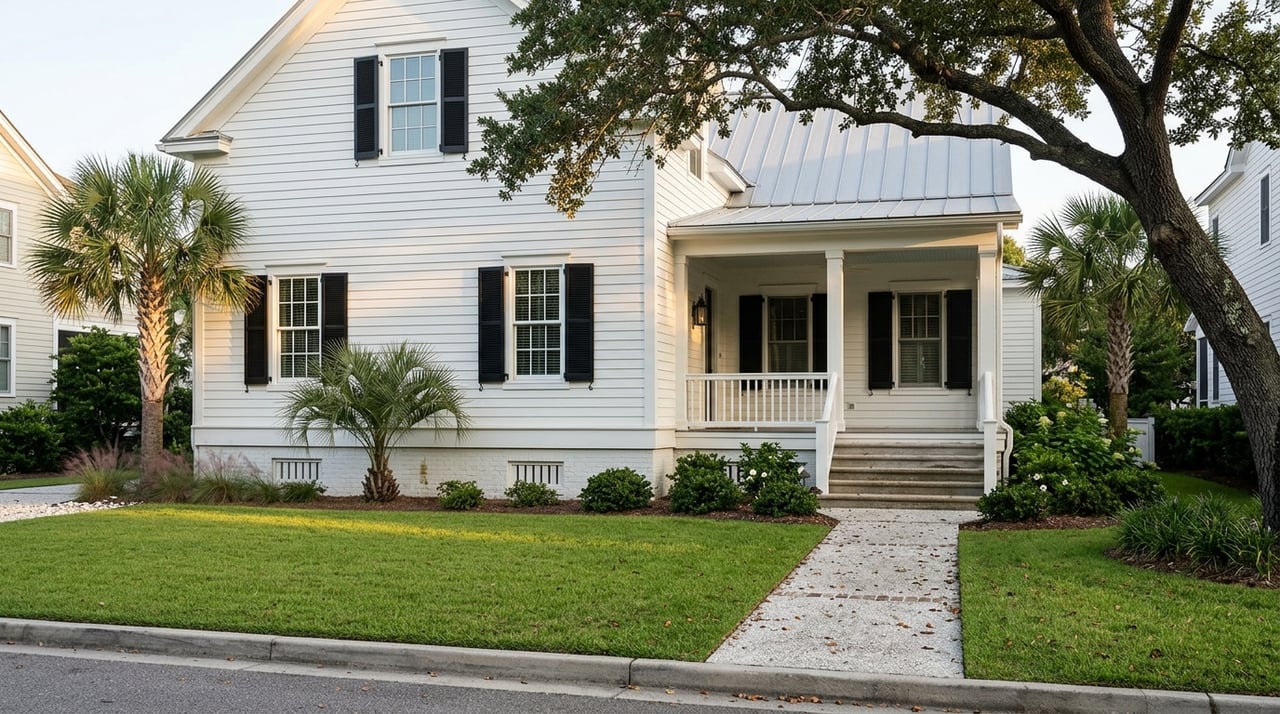
Trying to decide between a new build and an established neighborhood in South Mount Pleasant? It is one of the most important tradeoffs you will make in this part of the Lowcountry, where limited land, coastal conditions, and neighborhood character all shape long-term value. If you are weighing modern convenience against mature setting and architectural charm, this guide will help you compare both paths with more clarity. Let’s dive in.
Why this choice matters
South Mount Pleasant is not a market with endless inventory or unlimited room to grow. According to the Town of Mount Pleasant Comprehensive Plan, the area’s general land-use pattern is largely set, with future growth focused more on infill and redevelopment than large-scale expansion.
That matters because your decision is not just about the home itself. In this part of Mount Pleasant, lot conditions, flood considerations, location, and neighborhood rules can shape your ownership experience just as much as square footage or finishes.
The market also remains active, though more balanced than in a peak frenzy. Redfin’s February 2026 snapshot reported a median sale price of $831,000, a median 107 days on market, and sale prices averaging about 97.9% of list price.
What new builds often offer
For many buyers, a new build wins on ease. The National Association of Realtors notes that new construction often appeals because of modern layouts, lower near-term maintenance, energy-efficient systems, and builder warranty coverage.
In practical terms, that can mean open living spaces, newer materials, and fewer immediate repair projects after closing. If you want a home that feels current from day one, new construction can be a strong fit.
Modern layouts and customization
One of the biggest draws of new construction is flexibility. According to NAR’s consumer guide to buying land and building a new home, some buyers can choose from stock plans and still customize layout, levels, exterior details, and interior finishes.
If you are purchasing a spec home early enough in the process, you may also be able to select items like flooring, lighting, tile, countertops, cabinets, and vanities. That level of personalization is hard to match in an established resale home unless you plan to renovate.
Better efficiency and comfort
Energy performance is another clear advantage. ENERGY STAR-certified new homes must meet EPA requirements and are at least 10% more energy efficient than homes built to minimum code levels.
That can translate into lower utility bills, improved indoor comfort, and updated systems that may support resale appeal over time. In a coastal climate, efficiency and comfort can be more than a bonus. They can become part of your day-to-day quality of life.
Warranty coverage
New builds also tend to come with warranty protection that existing homes do not include automatically. The FTC explains that builder warranties generally cover workmanship and materials for one year, major systems like HVAC, plumbing, and electrical for two years, and sometimes up to 10 years for major structural defects.
That does not eliminate every risk, but it can reduce uncertainty in the first years of ownership. For buyers who want fewer surprise expenses up front, that can be a major point in favor of new construction.
What established neighborhoods often offer
Established neighborhoods appeal to a different set of priorities. NAR notes that existing homes often offer mature landscaping, move-in readiness, more architectural variety, and lower upfront pricing than a comparable new build.
In South Mount Pleasant, that appeal is especially strong if you value setting and streetscape. Tree canopy, lot character, and older architectural details can create a feeling that new communities may take years to develop.
Character and sense of place
Few places illustrate that better than Old Village. The town describes Old Village as a quiet residential neighborhood with large era-style homes, shade-tree-lined streets, and small-town appeal across a 30-block historic district.
That type of environment is difficult to replicate. If you are drawn to established surroundings, distinctive homes, and a strong sense of place, older neighborhoods often deliver the lifestyle many buyers imagine when they picture South Mount Pleasant.
Mature landscaping and larger-lot feel
Established neighborhoods also tend to offer mature trees and a more layered streetscape. In South Mount Pleasant, where the town places emphasis on tree protection, wooded buffers, and scenic views in its planning framework, those natural features can feel like a meaningful part of the property’s value.
That does not always mean a bigger lot on paper, but it can mean a more settled visual environment. For many buyers, that lived-in setting is part of the home’s appeal.
Remodel potential with tradeoffs
An existing home may also give you room to update over time rather than paying for every upgrade up front. That can help if you prefer to tailor a property gradually.
Still, there are tradeoffs. Older homes may have less efficient materials, more maintenance needs, and floor plans that feel dated compared with newer construction. They also do not come with a builder warranty unless you separately purchase a home warranty or service contract.
Historic rules and neighborhood restrictions
Not all limits come from an HOA. In some established areas, design guidelines can shape what you can change on the exterior of a home.
For example, the Old Village Historic District guidelines require design review for buildings in the district. New construction and exterior changes must be harmonious with the block’s rhythm, scale, massing, roof form, setbacks, landscaping, and broader streetscape.
That can be a major benefit if you value consistency and preservation. It can also mean less flexibility if you want to make large exterior changes or additions.
In newer communities, restrictions may instead come through an HOA. The Consumer Financial Protection Bureau notes that HOA dues are typically paid directly to the association and can range from a few hundred dollars a month to more than $1,000 a month.
Flood and insurance should be core factors
In South Mount Pleasant, flood risk is not a side note. It should be part of your decision from the start.
The town’s Flood Protection information notes that permits issued on or after January 29, 2021 are reviewed under updated flood ordinances, including a design flood elevation of base flood elevation plus two feet. Elevation certificates are also required for structures in Special Flood Hazard Areas.
That means a newer home may benefit from more current flood-related standards. At the same time, every property still needs individual review, especially if flood insurance cost matters to your monthly budget.
The town also makes two points buyers should keep top of mind. First, standard homeowners insurance does not cover flood losses. Second, homes in high-risk flood areas have a 26% chance of flood damage over a 30-year mortgage.
Mount Pleasant participates in the National Flood Insurance Program and currently has a Class 6 rating, which gives residents a 20% reduction on flood-insurance premiums through the program. Even so, flood zone, finished-floor height, and insurance cost should be treated as key ownership factors whether you buy new or established.
Commute and connectivity matter more than ever
A beautiful house can lose some of its shine if the daily drive does not work for you. That is why location within South Mount Pleasant deserves close attention, especially when comparing a newer corridor location with a more established neighborhood.
The town’s Mobility Action Plan focuses on optimizing existing transportation infrastructure and improving connections through projects like Mount Pleasant Way, the IOP Connector Trail, the I-526 to Whipple Road project, and All American Boulevard near US 17.
Those efforts may improve access over time, but your daily experience is still what matters most today. A rush-hour drive test is one of the smartest ways to compare two otherwise appealing options.
New build vs established neighborhood at a glance
If you want a simple way to frame the choice, it often comes down to priorities.
If you prioritize... | You may lean toward... |
|---|---|
Modern layouts | New construction |
Lower near-term maintenance | New construction |
Energy efficiency | New construction |
Builder warranty coverage | New construction |
Mature trees and landscaping | Established neighborhoods |
Distinctive architecture | Established neighborhoods |
Strong neighborhood character | Established neighborhoods |
Remodel potential | Established neighborhoods |
Neither path is automatically better. The right choice depends on how you balance convenience, character, flexibility, and long-term ownership costs.
How to choose in South Mount Pleasant
If you are trying to narrow the decision, focus on the factors that will matter long after closing. In a supply-constrained coastal market, the smartest choice is usually the one that fits your lifestyle, risk tolerance, and time horizon.
Ask yourself:
- Do you want a move-in-ready home with updated systems and fewer immediate projects?
- Do you value mature surroundings and architectural character more than customization?
- Are you comfortable with possible renovation costs in an older home?
- Have you reviewed flood zone, elevation, and likely insurance costs for each property?
- Are there HOA dues, historic review rules, or other restrictions that could affect your plans?
- Have you tested the commute and daily access at the times you will actually travel?
In South Mount Pleasant, those questions often reveal more than a finish palette or listing photos ever will.
The bottom line
New builds in South Mount Pleasant usually make the most sense if you want modern design, stronger energy performance, warranty coverage, and fewer near-term maintenance demands. Established neighborhoods usually make the most sense if you want mature landscaping, distinctive architecture, a larger-lot feel, and a deeper sense of place.
Because this market is shaped by limited land supply, active infrastructure planning, and real flood and insurance considerations, the best decision is rarely one-size-fits-all. If you want clear, property-level guidance on how a specific home fits your goals in South Mount Pleasant, Robertson Allen can help you evaluate the details with discretion and local expertise.
FAQs
Is new construction usually more expensive in South Mount Pleasant?
- New construction often carries a higher upfront cost, while existing homes may offer a lower entry price but more repair, update, or maintenance needs over time.
Do established South Mount Pleasant neighborhoods have more restrictions?
- Some do. In historic areas like Old Village, exterior changes may require design review, while newer communities may have HOA rules and dues.
Are new homes in Mount Pleasant better for flood protection?
- Newer homes may be built under updated flood ordinances, but flood zone, elevation, and insurance costs should still be reviewed for each property individually.
Do I need flood insurance for a home in South Mount Pleasant?
- Standard homeowners insurance does not cover flood damage, so flood insurance and flood risk should be evaluated carefully when buying in this area.
Are established neighborhoods in South Mount Pleasant better for character?
- Many buyers choose established neighborhoods for mature trees, varied architecture, and a stronger sense of place, especially in areas with historic or long-established streetscapes.
How can I compare commute impact between South Mount Pleasant neighborhoods?
- A rush-hour drive test is one of the best ways to compare daily convenience between a newer corridor location and a more established neighborhood.