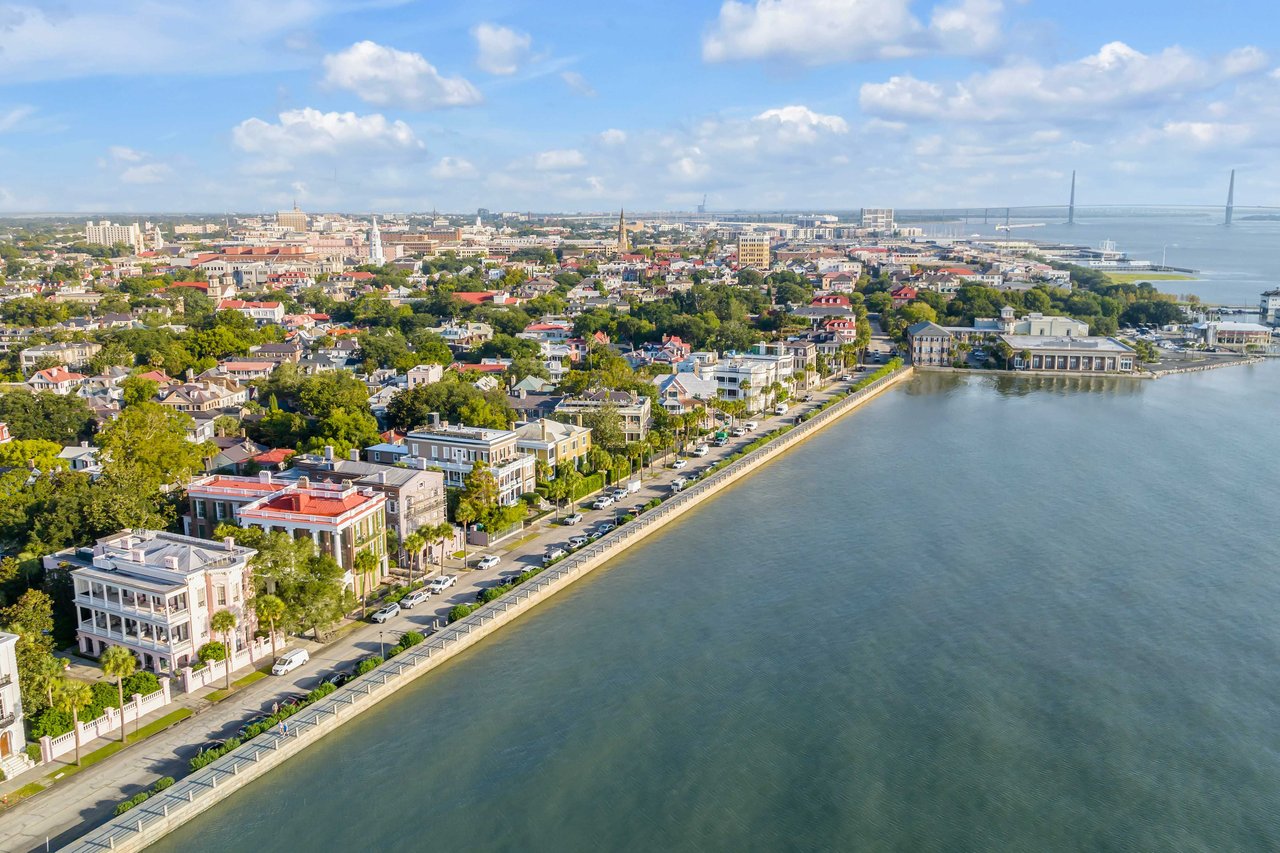
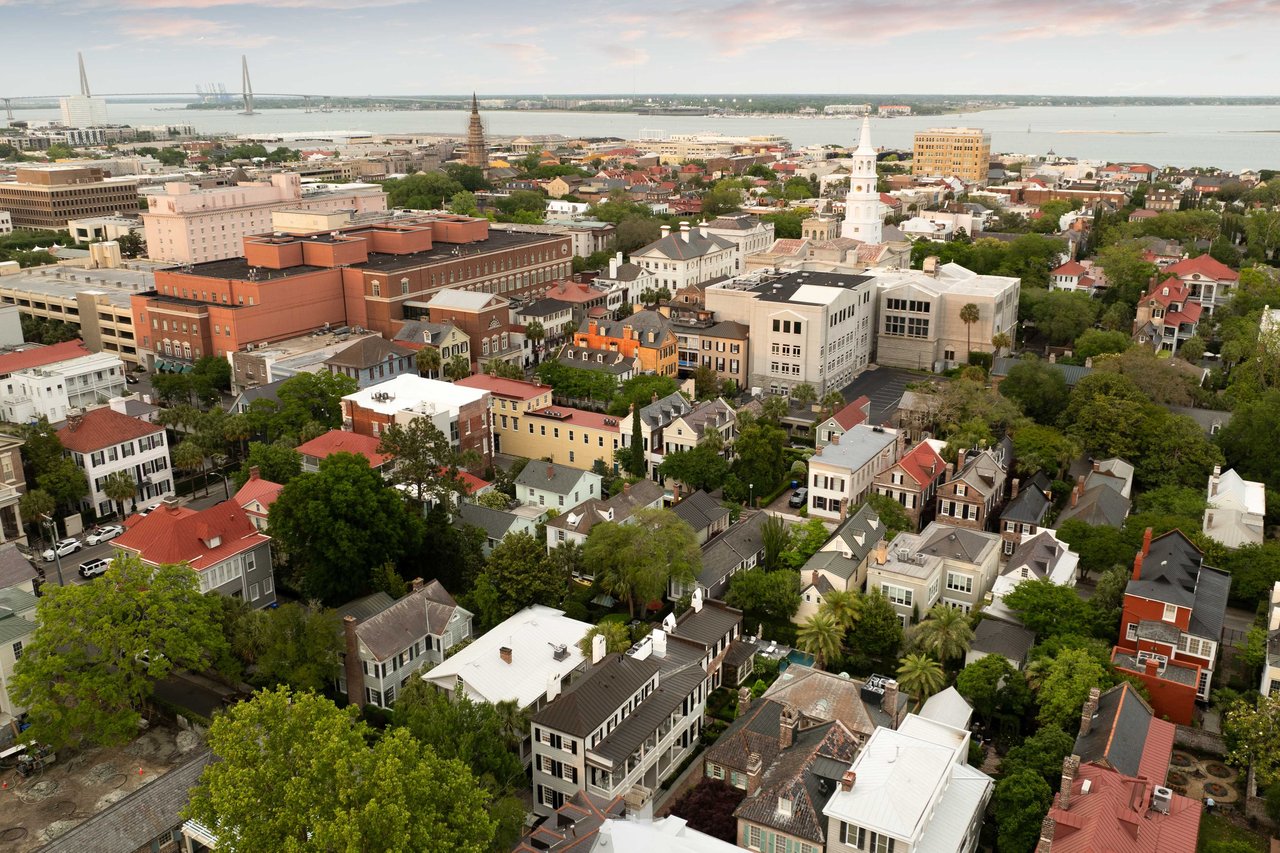
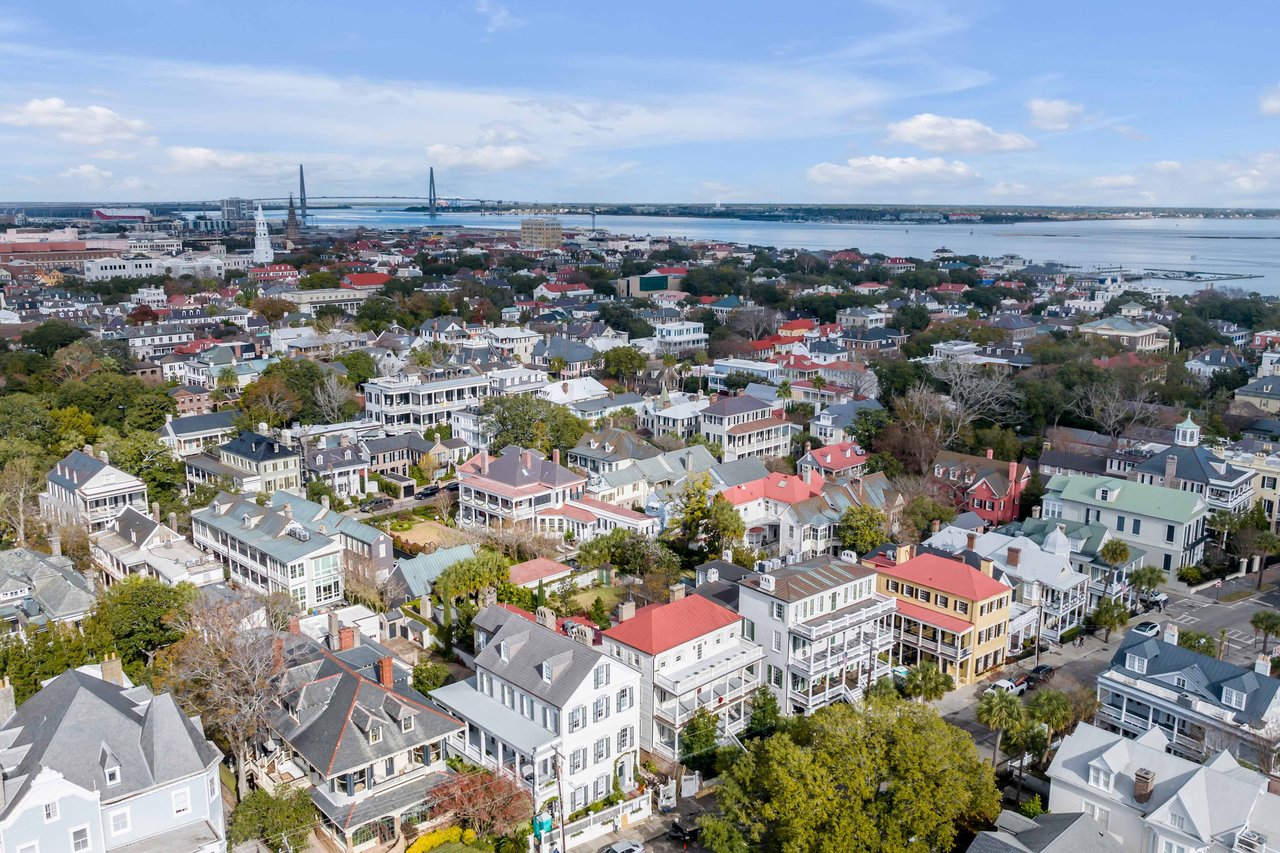

The Peninsula is the historic and cultural heart of Charleston, offering a unique blend of timeless architecture, vibrant neighborhoods, and a highly walkable urban lifestyle. Bordered by the Ashley River and Cooper River, this iconic area is home to some of the city's most recognizable destinations, including the Historic Charleston City Market, Rainbow Row, The Battery, and King Street. Its combination of historic charm, waterfront views, renowned dining, and cultural attractions continues to make it one of the most desirable places to live in the Lowcountry.
The Peninsula real estate includes a diverse selection of historic single houses, luxury waterfront residences, renovated townhomes, modern condominiums, and new infill developments. Whether you're searching for a primary residence, second home, or investment property, The Peninsula offers exceptional access to Charleston's restaurants, shopping, parks, medical centers, and business districts, creating a lifestyle that is both convenient and distinctly Charleston.
The Peninsula Charleston real estate market is unlike any other in the Charleston area, shaped by its limited inventory, nationally recognized historic districts, and enduring demand for walkable urban living. From restored 18th and 19th-century homes south of Broad Street to luxury condominiums overlooking the Charleston Harbor and newer residences in Upper Peninsula neighborhoods, property values are influenced by location, architectural significance, and lifestyle.
According to the latest Redfin market data, the median home sale price reached approximately $1.23 million over the three months ending May 2026, reflecting a 6.4% year-over-year increase. During that same period, 194 homes were sold, with properties spending a median of 79 days on the market. While buyers have become more selective, well-located and thoughtfully updated homes continue to attract strong interest. Whether you're purchasing a historic residence, an investment property, or a luxury condominium, understanding current pricing trends, inventory levels, and comparable sales is essential to making informed decisions in the Peninsula Charleston real estate market.
Several structural forces keep demand elevated on the Peninsula.
Peninsula prices vary significantly by neighborhood and property type.
The Peninsula encompasses more than a dozen distinct neighborhoods, each with its own character and price profile.
South of Broad is widely considered Charleston's most prestigious address. Bounded by Broad Street to the north and the Charleston Battery to the south, this neighborhood is home to preserved 18th and 19th-century mansions, hidden garden courtyards, and direct access to the harbor. Rainbow Row, the Battery seawall, and White Point Garden anchor the area's iconic identity. Properties here are protected by the Board of Architectural Review, and inventory is exceptionally limited. Expect to pay $2,000,000 and above, with many significant homes trading well above $5,000,000.
The French Quarter sits along the eastern edge of the Peninsula between Broad Street and Market Street, bordering the Cooper River waterfront. The neighborhood is known for its art galleries along the French Quarter Art Walk, cobblestone streets, and proximity to Waterfront Park. Property types include historic row houses, townhomes, and luxury condos with harbor views. Median prices in the French Quarter range from $1,500,000 to above $2,500,000.
Harleston Village sits north of Broad Street between Calhoun Street and the Ashley River. It is one of the oldest neighborhoods in Charleston and home to the College of Charleston. Architectural styles range from Georgian and Italianate to Victorian and Greek Revival. Colonial Lake serves as the neighborhood's centerpiece, offering a beloved walking and jogging path for residents. Homes range from $600,000 for smaller condos to above $3,000,000 for larger historic single houses.
Ansonborough occupies a quiet stretch of the lower-middle Peninsula east of King Street and north of Broad. It is one of the few areas that remains largely free of heavy tourist foot traffic, making it a particularly desirable residential enclave. The neighborhood sits within walking distance of the Charleston City Market, Waterfront Park, and the Harris Teeter on East Bay Street. Properties here are exclusively historic and command prices consistent with the broader South of Broad tier.
Cannonborough-Elliotborough has emerged as one of the Peninsula's most dynamic neighborhoods. Centered on Spring Street and Cannon Street (referred to by locals as Midtown), the area is walkable, restaurant-dense, and attracts a mix of young professionals, MUSC employees, and families. Historic single houses, renovated shotgun homes, and newer infill construction coexist throughout. Legally permitted short-term rental properties on primary streets carry a significant premium, with some trading above $1,500,000.
Radcliffeborough lies between Harleston Village and Cannonborough-Elliotborough, just west of King Street. The neighborhood's proximity to the College of Charleston and MUSC generates consistent rental demand. Tree-lined streets and mostly residential blocks give the area a quieter atmosphere than the adjacent Midtown corridor. Properties here offer relatively accessible price points compared to the lower Peninsula, often in the $500,000 to $1,000,000 range.
Wagener Terrace sits at the upper end of the Peninsula near Hampton Park and The Citadel. The neighborhood is characterized by larger front yards, craftsman homes, and a quieter suburban feel that distinguishes it from neighborhoods further south. It is popular with families seeking more space while remaining on the Peninsula. Hampton Park provides significant green space and the neighborhood borders the Ashley River with occasional marsh views.
Hampton Park Terrace is listed on the National Register of Historic Places, with most of its housing stock dating to around 1912. The neighborhood flanks one of the largest parks on the Peninsula, offering walking paths, mature oak canopy, and a highly walkable block structure. Its manageable scale and historic designation make it attractive to preservation-minded buyers.
The Peninsula is a living architectural museum. Charleston single houses, double piazzas, antebellum mansions, Georgian row houses, and Italianate townhomes line streets that have changed remarkably little over two centuries. The Old and Historic District contains more pre-Revolutionary War buildings than any other city in the United States. For buyers who value authenticity and irreplaceable character, no other market in the South compares.
King Street is one of the most celebrated retail and dining corridors in the country. The street stretches from the market area in the lower Peninsula north through Midtown and into the Upper King design district, offering everything from Michelin-recognized restaurants and James Beard Award-winning chefs to independent boutiques, antique dealers, and national brands. For Peninsula residents, world-class dining and shopping are within walking or cycling distance.
The Peninsula offers remarkable public green space for a walkable urban neighborhood. Waterfront Park along the Cooper River provides harbor views and the iconic Pineapple Fountain. The Battery seawall promenade at White Point Garden remains one of the most scenic walks in American urban life. Colonial Lake in Harleston Village draws walkers, joggers, and families daily. Hampton Park and Brittlebank Park offer additional green space on the Ashley River side.
Spoleto Festival USA, one of the premier performing arts festivals in the world, takes place each spring across Peninsula venues. The Southeastern Wildlife Exposition (SEWE), the largest wildlife art exposition in the United States, draws tens of thousands of visitors annually. The Gaillard Center, the Charleston Museum (the oldest public museum in the country), the Gibbes Museum of Art, and numerous galleries along the French Quarter Art Walk make the Peninsula a genuine cultural destination year-round.
Peninsula residents have access to both public magnet programs and highly regarded private schools. Porter-Gaud School and Charleston Day School are both rated A+ by Niche and serve students from across the Peninsula. Public school options include the academically competitive Charleston School of the Arts magnet and the Military Magnet Academy. Many Peninsula families research the Charleston County School of Choice options during their home search.
The Peninsula is one of the most walkable neighborhoods in South Carolina. Most areas score exceptionally high on Walk Score, and the flat terrain makes cycling practical for daily errands. Sullivan's Island, Isle of Palms, and Folly Beach are all accessible within 30 to 45 minutes by car.
Peninsula buyers typically fall into three categories: primary residence buyers relocating from major metros, second-home buyers seeking a pied-a-terre in Charleston, and investors acquiring long-term hold properties for appreciation. Each goal leads to a different neighborhood, property type, and price point. South of Broad and the French Quarter are most popular with primary buyers and luxury second-home buyers. Cannonborough-Elliotborough and Radcliffeborough attract primary residents and supplemental rental buyers. Clarifying your intent before beginning the search simplifies every subsequent decision.
All of Charleston is a flood zone. The relevant question is which zone a specific property occupies. The City of Charleston designates properties as Zone AE (high risk, flood insurance required with a mortgage), Zone VE (coastal velocity wave action, highest risk), or Zone X (lower risk, flood insurance not mandatory but often advisable). Use FEMA's Flood Map Service Center and the property's tax record to verify the flood zone before making an offer. Approximately 25% of all flood insurance claims come from low-to-moderate risk zones, so even Zone X buyers are advised to obtain quotes.
Insurance on the Peninsula requires a separate homeowners policy plus, in most cases, a flood insurance policy through the National Flood Insurance Program (NFIP) or a private carrier. Coastal wind coverage may be required separately from the standard homeowners policy. Costs vary based on elevation, flood zone, year of construction, and proximity to water. Newer construction built to current elevation requirements typically qualifies for lower rates. Always obtain insurance estimates before finalizing an offer, as annual premiums can materially affect carrying costs.
Properties within the Old and Historic District are subject to review by the Board of Architectural Review (BAR). The BAR oversees exterior modifications, additions, and demolitions to ensure changes are consistent with the historic character of the district. Buyers planning renovations should consult with a BAR-experienced architect before purchasing to understand what approvals may be required and typical timelines.
The City of Charleston has some of the strictest short-term rental regulations in the country. On the Peninsula, whole-house short-term rentals by non-owner-occupants are prohibited except within the STR Overlay Zone in Downtown Charleston. Within residential areas, STRs are permitted only for owner-occupied properties, limited to one unit per property, and in buildings that are 50 or more years old (or individually listed on the National Register of Historic Places for Category 1 properties). STR permits do not convey to new owners and must be reapplied for annually. Buyers seeking STR income should verify zoning eligibility before purchase.
Jumbo mortgage products are standard for Peninsula transactions, given median prices well above conforming loan limits. Buyers acquiring historic properties may encounter additional appraisal complexity due to limited comparable sales. Portfolio lenders with local expertise in the Charleston market can be advantageous. South Carolina law requires a licensed attorney to handle real estate closings. Since August 2024, buyers must sign a Buyer Representation Agreement before touring homes. Property taxes in South Carolina are assessed at 4% of fair market value for primary residences and 6% for second homes and investment properties.
Peninsula buyers are sophisticated, often conducting national and international searches before focusing on Charleston. Properties that are professionally photographed, staged, and marketed command materially higher prices and shorter days on market. At this price point, presentation quality is a direct determinant of outcome.
Historic properties present unique valuation challenges. Comparable sales can be limited, especially for larger South of Broad estates. Pricing too high relative to condition creates extended market time that signals weakness to buyers. Pricing accurately from the start and creating early competitive interest produces the strongest results. Robertson Allen has set the record for multiple landmark Peninsula transactions precisely because pricing and marketing strategy are applied with data, not guesswork.
Peninsula real estate activity generally peaks in the spring and early summer, with secondary activity in the fall. Luxury buyers in this market are less sensitive to mortgage rates than entry-level buyers, so traditional rate-driven seasonality is less pronounced. The most significant factor for premium Peninsula properties is visibility within the right buyer networks nationally and internationally.
South Carolina requires sellers to complete the Residential Property Condition Disclosure Statement. For Peninsula properties, sellers should be prepared to address flood zone designation, any history of flooding or water intrusion, roof age and condition, foundation condition (particularly for older masonry construction), and HVAC status. Historic properties with original systems require particular attention to disclosure accuracy.
Mount Pleasant, located just east of the Cooper River, is the most affluent suburb in the Charleston metro with a Zillow Home Value Index of $767,550 and median sale prices between $855,000 and $913,000 in late 2025. Mount Pleasant offers top-rated public schools, newer construction, master-planned communities, and larger lots. The Peninsula offers unmatched walkability, historic character, and access to the city's cultural and culinary core. Buyers choosing between them are typically weighing lifestyle priorities rather than purely financial ones.
Daniel Island is a master-planned community within the City of Charleston, offering waterfront properties, two golf courses, the Credit One Stadium tennis venue, and strong family appeal. It provides the rare combination of city-of-Charleston property tax treatment with a suburban, community-focused environment. The Peninsula is the right choice for buyers who want authentic historic architecture, walkable urban density, and the cultural energy of downtown. Daniel Island suits buyers who prefer new construction, HOA-managed amenities, and quieter residential character.
James Island and West Ashley offer significantly lower price points, generally $400,000 to $600,000, for buyers who want proximity to downtown without downtown prices. Both are 10 to 20 minutes from the Peninsula by car. They lack the walkability, architectural heritage, and prestige address of the Peninsula but provide strong value for buyers prioritizing space, newer construction, or investment cash flow.
The Peninsula's finite land supply and sustained demand from domestic and international buyers create a structural foundation for long-term price appreciation. The Charleston metro median held near $425,000 for three consecutive years before resuming upward momentum, indicating pricing stability rather than speculative volatility. High-end Peninsula properties, particularly those south of Broad Street, have demonstrated appreciation through every economic cycle since the post-financial crisis recovery.
Downtown Charleston commands the highest rental rates in the metro, averaging $4,100 or more per month. A diversified tenant pool including MUSC medical professionals and residents, College of Charleston faculty and students, Boeing and port workers, and a steady stream of corporate relocators supports year-round occupancy. For owner-occupants with eligible properties, supplemental short-term rentals of carriage houses or accessory units can generate additional income within the city's regulatory framework.
South Carolina assesses property taxes at 4% of fair market value for owner-occupied primary residences and 6% for second homes and investment properties. The state does not have an estate tax. Capital gains from the sale of a primary residence may qualify for the federal exclusion of up to $250,000 for single filers or $500,000 for married filers. Consulting a tax professional familiar with South Carolina real estate is advisable before structuring a purchase.
Few agents know the Peninsula the way Robertson Allen does. He grew up here, raised his family here, and has spent more than two decades representing its most significant properties. These are his personal favorites, shared in his own words.
Some of the best memories Robertson has as a child involve visiting his great-grandfather at his house at 15 Meeting Street. So much of Charleston's history and his childhood was spent on this street. Lower Meeting Street runs through the heart of South of Broad, flanked by some of the finest antebellum architecture in the country and offering direct sightlines to the harbor. For Robertson, it is not just a coveted address. It is home.
Robertson counts Mike Lata, the James Beard Award-winning chef and owner of The Ordinary, as both a client and one of the best chefs in the country. Set inside a beautifully restored 1920s bank hall on King Street, The Ordinary is a seafood and oyster hall that has become one of the defining dining experiences in the American South. For Peninsula residents, it represents exactly what makes Charleston's culinary scene extraordinary.
Robertson's answer is immediate: time with his family. His wife and two sons love the outdoors, and the Allen family makes the most of everything the Charleston area offers. Boating, fishing, and water sports are staples. The Peninsula's position between the Ashley and Cooper Rivers, minutes from the Intracoastal Waterway and the Atlantic, makes it an exceptional base for the Lowcountry lifestyle that draws families to Charleston from across the country.
Robertson's kitchen staple is the Johns Island heirloom tomato. Countless dishes in the Allen home have been built around these remarkable fruits, which come from Johns Island, just a short drive from the Peninsula and one of the most productive agricultural areas on the East Coast. The heirloom tomato season is a beloved marker of summer for Peninsula residents who know where to look.
Robertson has watched the Charleston Wine + Food Festival grow from a regional gathering into an internationally recognized culinary event, with the number of celebrated chefs participating each year continuing to expand. Held each spring across Peninsula venues, the festival draws James Beard Award winners and culinary luminaries from around the world. For Peninsula residents, it is simply part of the calendar.
Robertson's perspective on White Point Garden and the High Battery is that of someone who has walked it hundreds of times and still feels the weight of what it represents. From the seawall, you can see Fort Sumter, Morris Island, Castle Pinckney, and Sullivan's Island, a panoramic view of some of the most consequential geography in American history. For buyers considering South of Broad, this landmark is not a tourist attraction. It is a neighbor.
Prices vary significantly by neighborhood. South of Broad and the French Quarter have median single-family prices ranging from $1,500,000 to above $3,000,000. Harleston Village and Ansonborough typically range from $1,000,000 to $2,500,000. Cannonborough-Elliotborough and Radcliffeborough range from approximately $700,000 to $1,200,000. Condos and townhomes are available across the Peninsula from roughly $400,000 and up.
Yes, for buyers focused on long-term appreciation and stable rental demand. The Peninsula's finite land supply, historic preservation protections, strong lifestyle appeal, and diversified tenant pool create durable investment fundamentals. Short-term rental rules are strict, so buyers whose primary goal is STR income should consult an expert on zoning before purchasing.
Whole-house STRs by non-owner-occupants are generally prohibited on the Peninsula outside of the STR Overlay Zone. Owner-occupants may be eligible to short-term rent a portion of their property or an accessory unit, subject to specific category requirements including building age, parking, and permit approval. Permits do not transfer to new owners. Review the City of Charleston's current STR ordinance and consult with a knowledgeable agent before purchasing with STR income as a primary goal.
The Peninsula includes South of Broad, the French Quarter, Harleston Village, Ansonborough, Cannonborough-Elliotborough, Radcliffeborough, the Eastside, Wagener Terrace, Hampton Park Terrace, Mazyck-Wraggborough, North Central, and several additional micro-neighborhoods along the upper Peninsula near The Citadel.
Sullivan's Island is approximately 20 to 25 minutes from the lower Peninsula by car. Isle of Palms is approximately 30 minutes. Mount Pleasant begins just across the Arthur Ravenel Jr. Bridge, roughly 10 minutes from downtown. James Island is 10 to 15 minutes via the James Island Connector. Folly Beach is 20 to 25 minutes.
Public school options include Charleston Day School (A+ rated, private), Porter-Gaud School (A+ rated, private), the Charleston County School of the Arts magnet, and the Military Magnet Academy. Many Peninsula families research Charleston County School of Choice options, which allow students to attend public magnet programs outside their immediate attendance zone.
The lower Peninsula (South of Broad, French Quarter, Ansonborough) is consistently competitive, with very limited inventory and strong demand. Mid-Peninsula neighborhoods like Harleston Village and Cannonborough-Elliotborough see moderate competition, with well-priced turnkey homes moving within 30 to 45 days. The upper Peninsula (Wagener Terrace, Hampton Park Terrace) is less frenetic but still sees brisk activity for updated properties.
The Peninsula offers historic Charleston single houses, double-piazza mansions, antebellum estates, carriage houses, renovated row houses, shotgun-style homes, craftsman bungalows, luxury condos in historic conversions, and modern infill construction. South of Broad is almost exclusively historic, while the upper Peninsula has more variety including newer builds.
Properties in Zones AE and VE require flood insurance when a mortgage is involved. Most of the built Peninsula falls into Zone X (lower risk), where flood insurance is not mandatory but is frequently recommended. The City of Charleston's flood zone tool and FEMA maps are the authoritative sources for individual property designations. Approximately 25% of flood insurance claims nationwide come from lower-risk zones, so even buyers in Zone X should obtain a quote and evaluate the risk.
The lower Peninsula (South of Broad, French Quarter, Harleston Village, Ansonborough) is consistently regarded as very safe and family-friendly. The upper Peninsula has more variation by street and block. Working with an agent who knows the Peninsula at a granular level is the best way to identify properties that align with your lifestyle and safety priorities.
The Peninsula has delivered consistent appreciation across multiple market cycles, supported by finite land supply, historic preservation, sustained national and international buyer demand, and the enduring appeal of Charleston as a lifestyle destination. Record-setting transactions in 2025 and early 2026 confirm that the luxury tier remains active even as broader market conditions moderate. Long-term holders of well-located Peninsula properties have generally seen strong compounding returns.
Robertson Allen is the #1-ranked individual agent in Charleston County and the State of South Carolina by RealTrends (2023 and 2024), with more than two decades of Peninsula market expertise and over $136 million in closed transactions in 2024 alone. He has represented more $10 million-plus properties than any other agent in the region and holds the record for some of the most significant residential sales in Charleston history.
Whether you are buying your first Peninsula home, upgrading to a landmark South of Broad estate, or selling a property with complex historic considerations, Robertson brings the market intelligence, negotiating skill, and professional network to deliver results.
Contact Robertson Allen to schedule a confidential consultation.
Looking for a specific type of property? Browse these featured The Peninsula, Charleston property collections to find land, townhomes, single-family homes, and multi-family investment opportunities.
Browse available lots and homesites to build your dream home in The Peninsula, Charleston.
Explore stylish townhomes offering modern living in The Peninsula, Charleston's desirable neighborhoods.
Discover single-family homes ranging from historic residences to newly built properties.
Browse duplexes, triplexes, and multi-family properties ideal for homeowners and investors.
Find luxury homes in Charleston's Peninsula that combine sophisticated design with the convenience of downtown Charleston living.
152,014 people live in Peninsula of Charleston , where the median age is 36.1 and the average individual income is $58,583. Data provided by the U.S. Census Bureau.
Total Population
Median Age
Population Density Population Density This is the number of people per square mile in a neighborhood.
Average individual Income
Peninsula of Charleston has 66,408 households, with an average household size of 2.2. Data provided by the U.S. Census Bureau. Here’s what the people living in Peninsula of Charleston do for work — and how long it takes them to get there. Data provided by the U.S. Census Bureau. 152,014 people call Peninsula of Charleston home. The population density is 1,324 and the largest age group is Data provided by the U.S. Census Bureau.
Total Population
Population Density Population Density This is the number of people per square mile in a neighborhood.
Median Age
Men vs Women
Population by Age Group
0-9 Years
10-17 Years
18-24 Years
25-64 Years
65-74 Years
75+ Years
Education Level
Total Households
Average Household Size
Average individual Income
Households with Children
With Children:
Without Children:
Marital Status
Blue vs White Collar Workers
Blue Collar:
White Collar:
Robertson’s deep Charleston roots and extensive market expertise allow him to identify the city’s most desirable addresses and investment opportunities. His clients trust him for clear communication, exceptional negotiation skills, and an unwavering commitment to helping them achieve their real estate goals.