Thinking about a teardown, a major addition, or a custom build on Sullivan’s Island? The right lot can deliver a dream coastal home, but the wrong constraints can drain time and budget. You want clarity on rules, approvals, and timelines before you write an offer. This guide gives you the essentials on design review, height and coverage limits, flood and coastal permits, and the steps that keep a project on track. Let’s dive in.
What makes Sullivan’s Island different
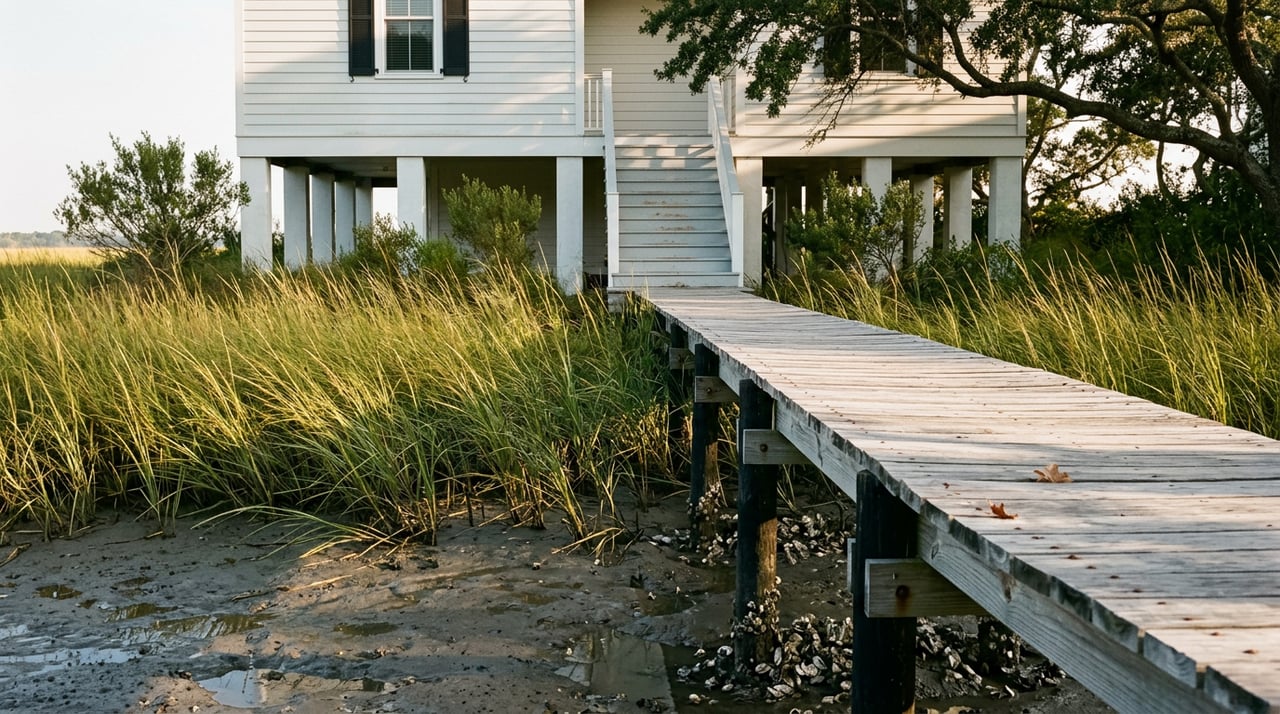
Sullivan’s Island participates in the National Flood Insurance Program and the Town states that the entire island lies within a Special Flood Hazard Area. That means most projects must meet strict flood elevation rules and many buyers will need flood insurance. The Town also notes that the most recent Flood Insurance Rate Map update took effect on January 29, 2021, which changed some zones and flood heights. The Town recommends obtaining an elevation certificate before purchase, and it keeps many on file. You can find floodplain guidance and contacts on the Town’s floodplain management page.
Lot coverage, height, and setbacks
Before you sketch a plan, ground your expectations in the island’s dimensional standards. The Town’s Design Review Board (DRB) application and worksheet summarize how coverage is calculated and how porches, decks, and heated space are counted. As a quick reference from the DRB materials, expect to work within:
- Principal building coverage commonly calculated using a design standard of about 20% on the worksheet.
- Maximum impervious coverage shown on the worksheet of 30%.
- Typical front and rear setbacks of about 25 feet.
- A hard minimum side setback of 10 feet for any principal building or attached porch or deck, even when relief is granted.
These values guide most single‑family feasibility checks. Always verify the exact formula and how your existing square footage is counted with the Town’s worksheet in the DRB application packet and the zoning code’s dimensional standards at Section 21-44.
Height is also limited. Town materials and court decisions applying the code reference a 38 foot maximum height for a principal building. You can see that cap discussed in a South Carolina Court of Appeals decision that interpreted the Town’s height standards. Review the reasoning in the published case summary and confirm parcel specifics with Town staff.
How DRB relief works
The DRB can approve modest design‑based modifications when a proposal meets neighborhood compatibility criteria. The ordinance allows up to a 25% modification to many dimensional standards, but it does not allow any principal building or attached porch or deck to be within 10 feet of a side property line. Some overlay districts on the island allow limited bonuses to height or square footage when the DRB finds they support compatibility. The overlay provisions are parcel specific, so be sure to check the parcel’s designation in the overlay section of the code before you assume a bonus applies.
Design Review Board: what to expect
Sullivan’s Island’s DRB is the primary design review authority for exterior work in residential and commercial areas. It issues Certificates of Appropriateness and meets monthly. Many projects, including new construction and most additions, must secure DRB approval before a building permit is issued. You can review schedules and procedures on the Town’s Design Review Board page.
The DRB application checklist requires an as‑built survey certified by a South Carolina land surveyor, a site plan, floor plans that clarify heated space versus porches and decks, and exterior elevations that show roof heights to natural grade, along with Finished Floor Elevation (FFE) and Lowest Structural Member (LSM). Where relevant, you must also show OCRM baseline and setback lines. The Town conducts a completeness check before placing items on the agenda and publishes application fees in the packet. See the current checklist and worksheet in the DRB application.
If your property is a designated historic resource, expect the DRB to apply the Town’s historic design guidance, which addresses both preservation and climate adaptation measures. That can include requests for specific treatments that balance elevation requirements with historic character.
Floodplain rules that shape design
Two floodplain concepts drive most island projects. First is the federal Substantial Improvement/Substantial Damage rule, which the Town applies locally. If the cost of improvements or repairs equals or exceeds 50% of the building’s pre‑improvement market value, calculated cumulatively over a local three‑year period, the entire structure generally must be brought up to current flood requirements. This trigger often shifts the economics toward a full replacement. Read the Town’s explanation of the 50% rule on the Substantial Improvements page.
Second is elevation terminology. Local submittals and code references use Base Flood Elevation (BFE), Finished Floor Elevation (FFE), Lowest Structural Member (LSM), and a Design Flood Elevation (DFE) defined as BFE plus the Town’s freeboard. Drawings must label BFE, FFE, and LSM so reviewers can evaluate compliance. You can find the local DFE definition in the floodplain section of the code at Section 21-161.
Coastal and state permits near the beach
If your lot is close to the beach or primary dune, the state’s Beachfront Management Act and OCRM jurisdiction may apply. Work seaward of the state baseline or within the state setback area is regulated, and many activities, including construction seaward of the baseline and changes to dunes or dune vegetation, require a permit or special permit from OCRM. These rules can limit or reshape plans for decks, driveways, or new structures, and they add time to the schedule. Review the statutory framework for baselines, setback lines, and permits in the South Carolina Beachfront Management Act.
Common project hurdles on the island
Even well‑planned projects run into friction on barrier islands. Here are issues that often drive scope, cost, or timelines on Sullivan’s Island:
- Substantial improvement trigger. The NFIP 50% rule, applied with a local three‑year lookback, can require elevating or otherwise bringing the entire structure into compliance. For many older homes, this becomes the decisive cost factor. See the Town’s Substantial Improvements guidance.
- Historic and design constraints. If the property is a designated Landmark or Traditional Island Resource, the DRB applies preservation‑minded guidance and may limit exterior changes while still accommodating flood and elevation needs.
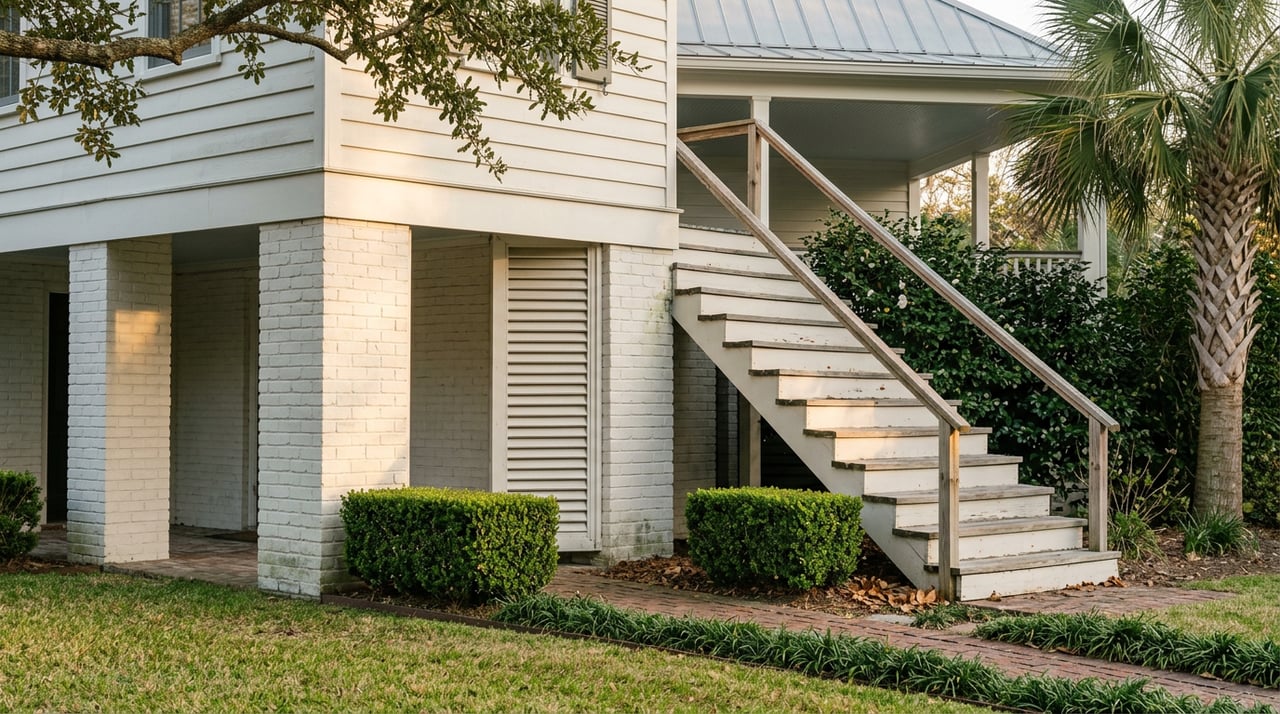
- Shrinking buildable envelope. Setbacks, pile footprints for elevated construction, impervious coverage limits, and any dune or state setback constraints can leave limited area for additions, pools, or garages. The DRB worksheet helps you test fit early.
- Coastal permits. OCRM rules for baseline and setback areas can constrain seaward work, add time, and require mitigation.
- Construction logistics and hours. Narrow rights‑of‑way and strict local construction hours increase staging complexity. The Town outlines hours and inspection procedures on the Building Department page.
- Tree preservation. The Town enforces a tree ordinance and reviews removals or major siting changes, which can affect layout and neighbor compatibility.
- Utilities and capacity. Confirm water and sewer service availability or lateral requirements with the Town before you assume a particular utility solution.
Pre‑offer due‑diligence checklist
Use this checklist to vet a property before you write an offer. It can save you months of redesign and approvals later.
- Confirm historic status. Ask whether the parcel is in a historic district or is a designated Landmark or Traditional Island Resource. Historic status triggers specific DRB review standards and submittal narratives.
- Obtain the Elevation Certificate. The Town keeps many on file. If none exists, order one from a South Carolina‑licensed surveyor. The certificate informs design elevations and flood insurance planning. Start with the floodplain management page.
- Order an as‑built survey. Make sure it shows property lines, spot elevations, and, if applicable, the OCRM baseline and setback lines. The DRB submittal checklist requires these items. See the DRB application packet.
- Pull the permit history. Ask the seller for all permits within the last three years and cross‑check with Town records. Recent work counts toward the 50% cumulative threshold and can limit what you can do next. The Town’s Building Department lists permitting contacts and processes.
- Run the DRB worksheet. Use the Town worksheet to calculate principal building square footage, coverage, impervious area, and setbacks. Test your concept before you commit to a price or timeline. The worksheet is included in the DRB application.
- Check for OCRM jurisdiction. If any portion of the lot lies seaward of the state baseline or within the state setback area, plan for an OCRM permit and possible special permit constraints. Review the state framework in the Beachfront Management Act.
- Confirm utilities. Verify sewer and water service availability, connection status, and any lateral replacement requirements with the Town’s departments.
- Review FIRMs and Town flood maps. Confirm whether the 2021 FIRM update or any later revisions changed the BFE for your parcel. Adjust design elevations and insurance planning accordingly.
Typical process and timelines
Most projects follow a predictable path, even though each property is unique:
- Pre‑design due diligence. Gather the elevation certificate, as‑built survey, OCRM baseline and setback information, and permit history.
- Conceptual DRB check. Many teams present a concept to identify issues early. While not always required, this step often saves time.
- DRB approval. Submit for preliminary and then final DRB approval. The Board meets monthly and publishes agendas and deadlines on the DRB page.
- Building permit. After DRB approval, submit technical plans through the Town’s permitting portal for review and inspections scheduling.
- Specialty permits. If the lot triggers OCRM or, in rare cases, federal permits, build that time into your plan.
- Construction and inspections. Follow Town construction hours and inspection procedures.
Timewise, a straightforward addition that needs only DRB review and a standard building permit can still take several months from concept to permit issuance. Projects that require OCRM permitting, Board of Zoning Appeals actions, or that trip the 50% substantial improvement threshold often extend into many months. Plan contingency time accordingly.
Smart strategies to protect value
- Start with the DRB math. Use the Town worksheet to pressure‑test your program. Right‑size porches, decks, and heated area before you fall in love with a plan.
- Respect the floodplain early. Know your BFE, target DFE, and likely FFE. If your concept nears the 50% threshold, model a full elevation or replacement option so you can compare total costs.
- Map your coastal constraints. If your lot is near the dune line, size your program inside the state setback area while you explore OCRM pathways. Build extra time into the schedule.
- Anticipate logistics. Plan crane access, staging, and delivery routes. Confirm allowable work hours and inspections to protect your timeline.
- Preserve flexibility for DRB review. Neighborhood compatibility matters. Consider massing, roof form, and porch language that align with island precedent while meeting modern flood and durability standards.
- Verify overlays. If your parcel lies in an overlay district that allows bonuses, understand the criteria and whether a compatibility finding is realistic.
Always verify current checklists, schedules, and parcel‑specific overlays with Town staff before finalizing your scope or offer terms.
Looking at a property now and want to understand the true build or expand potential before you bid? Connect with Robertson Allen for a discreet, data‑driven consultation tailored to your goals.
FAQs
What is the 50% substantial improvement rule on Sullivan’s Island?
- If the cost of improvements or repairs equals or exceeds 50% of the building’s pre‑improvement market value, calculated cumulatively over three years, the structure must be brought into compliance with current flood requirements, including elevation where applicable.
How tall can a new home be on Sullivan’s Island?
- Town materials and case law applying the code reflect a 38 foot maximum principal building height, with limited, parcel‑specific overlay bonuses possible when the DRB finds compatibility.
Do I need DRB approval for an addition or exterior change?
- Yes, the DRB reviews work that affects exterior appearance in residential and commercial areas and issues Certificates of Appropriateness; many projects require DRB approval before a building permit.
What are the typical setbacks and coverage limits for homes?
- Expect front and rear setbacks around 25 feet, a hard minimum side setback of 10 feet, a principal building coverage standard around 20% on the worksheet, and a 30% impervious coverage cap as shown on the DRB worksheet.
When do I need an OCRM permit near the beach?
- Work seaward of the state baseline or within the state setback area is regulated under the Beachfront Management Act; many seaward activities require an OCRM permit or special permit and may include restrictions.
How long does the approval process usually take?
- A simple addition that needs DRB approval and a standard building permit can take several months; OCRM permits, appeals, or substantial improvement upgrades can extend the timeline into many months. Check the DRB meeting schedule for current deadlines.