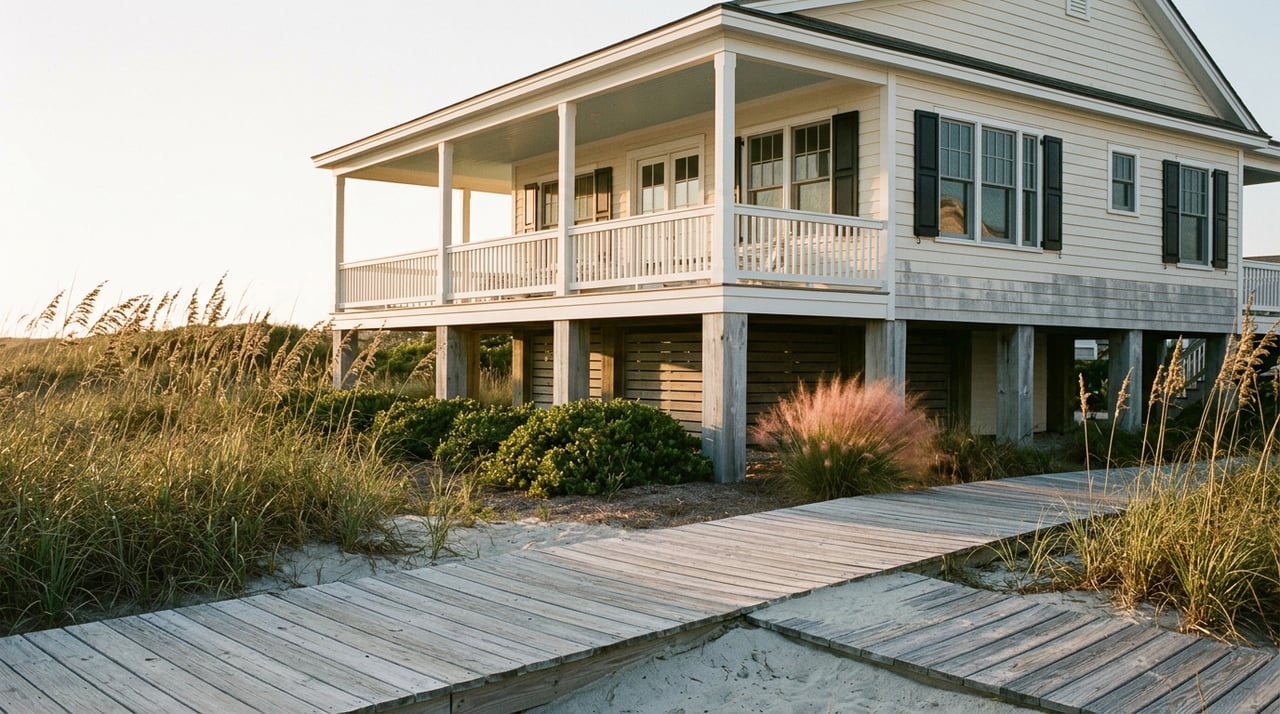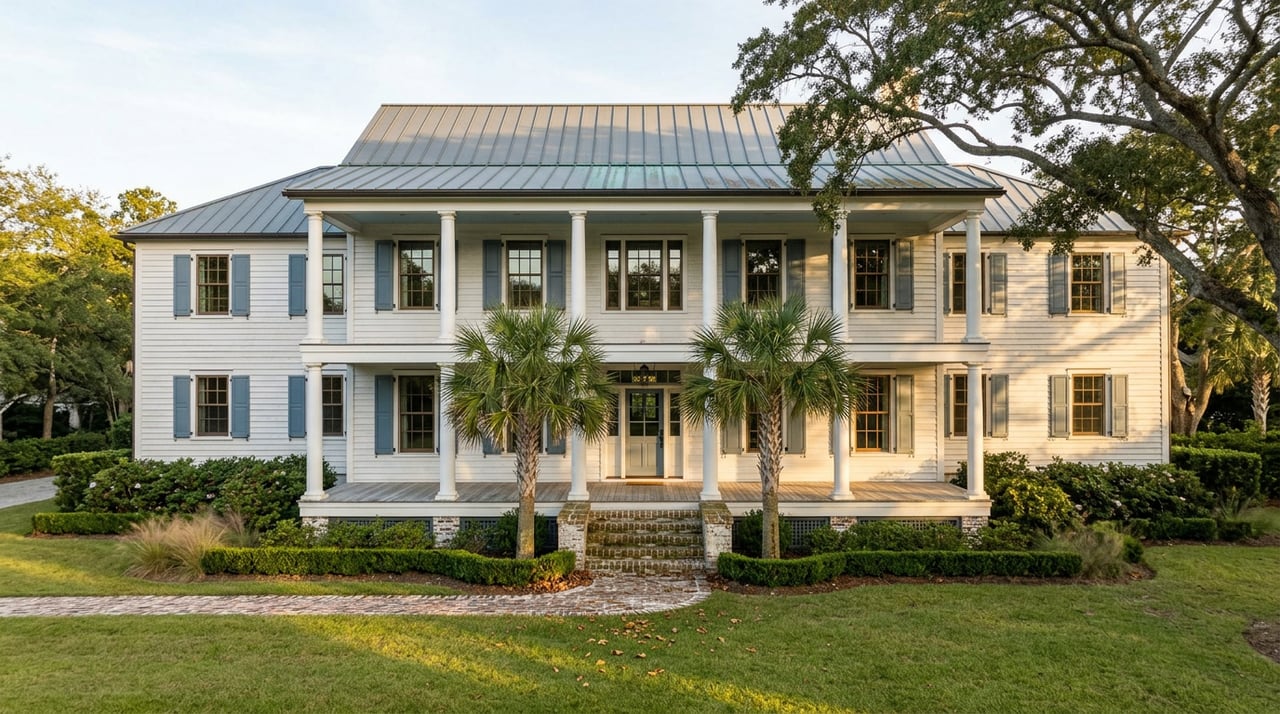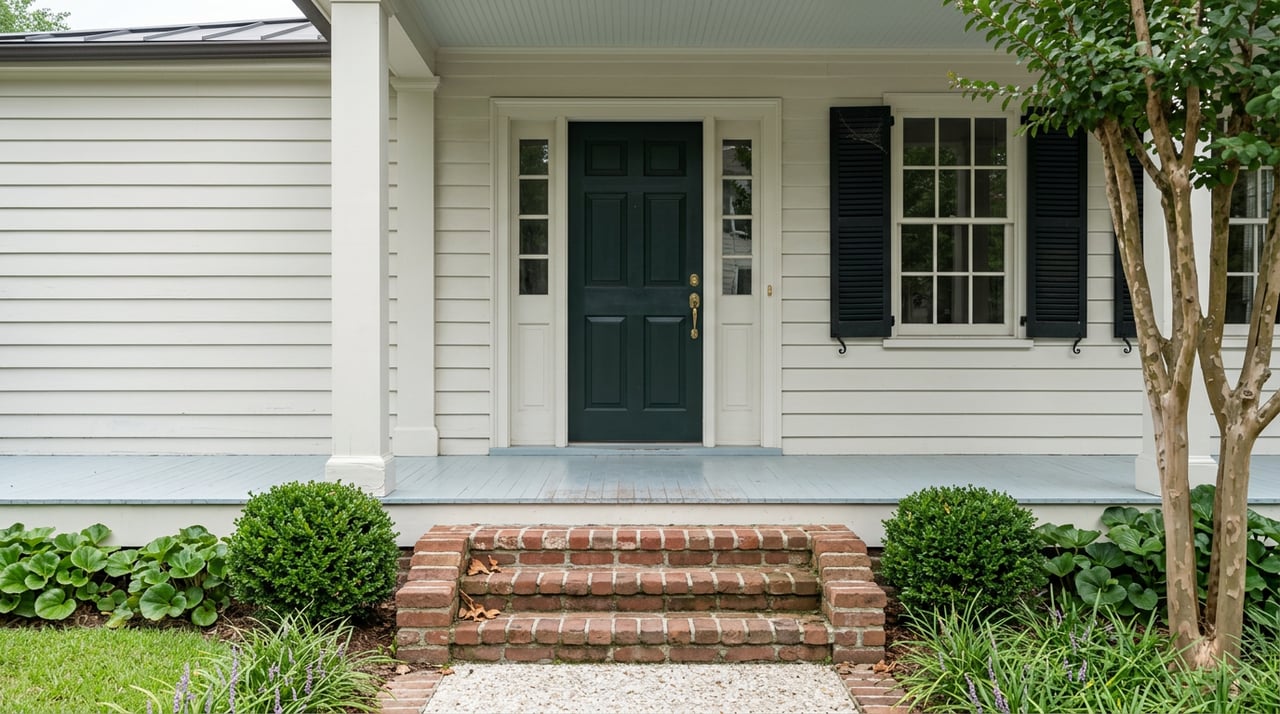
Ask a buyer touring a century-old cottage in North Central what protects the house next door from a teardown, and most will point to the word on the listing sheet: historic. Ask the same question about a single house in Harleston Village, well south of Line Street, and you'll hear the same word. Only one of those answers describes a guarantee that holds regardless of who owns the house next door.
The Charleston peninsula has one Board of Architectural Review, but for nearly a century it has operated under two different sets of authority, split at a single street. South of Line Street, in the Old and Historic District, the board reviews everything visible from the public right of way: new construction, additions, replacement windows, even a repaint. Between Line Street and Mount Pleasant Street, in neighborhoods like North Central, Wagener Terrace, and Hampton Park Terrace, homes fall into a district the city itself labels the Historic Materials Demolition District. There, the board's authority has historically stopped at one question: can this be torn down. It had no say over what replaced it.
What Demolition-Only Review Actually Produced
Neighborhood advocates in North Central and Wagener Terrace have been describing the practical effect of that gap for at least a couple of years. Stephen Rosenberg, who represents North Central, and Petar Lemajic of Wagener Terrace told Live 5 News in April 2025 that a pattern had taken hold in their neighborhoods: owners and developers removing historic material first and asking the board's forgiveness after the fact, rather than seeking permission before the work started. One case before the board that month involved a Poplar Street application for after-the-fact demolition approval, which the board denied. Another home, on Sumter Street and built in 1938, still stands on its original foundation, but its walls have already been swapped for new paneling. In that same wave of cases, the Preservation Society of Charleston flagged what it called an unauthorized demolition, a project that exceeded its approved scope and drew a stop-work order on a house the society described as one of three sister buildings that had defined the block.
The board's own rulebook made this almost inevitable. If members can only weigh whether to approve a demolition, and they cannot ask what will stand in a torn-down wall's place, they are making a decision blind to the outcome they are supposedly trying to protect. Preservation Society of Charleston CEO Brian Turner put it plainly in a Post and Courier editorial that fall:
"In any other city, this is 100 percent protected, but it's not here as we've cashed in our chips with other places that are older historically. It's just a matter of time until we wake up to this."
The Fix, and Its Catch
City Council took up a fix in the fall of 2025. On October 14, council approved on first reading an amendment to the BAR ordinance letting applicants in the Historic Materials Demolition District voluntarily show the board their future construction plans alongside a demolition request. Final approval followed later that October, with only Councilman Stephen Bowden voting against it, and the change took effect in time for the board's November 13, 2025 meeting. Mayor William Cogswell described it as a grassroots effort, driven by the same neighborhoods that had been raising the alarm.
The mechanics matter more than the headline. An owner who wants to demolish a rear wall for an addition can now choose to present that addition's design to the board at the same time. If they do, the board can weigh the demolition and the replacement together, and the owner agrees to build what was approved. Robert Summerfield, the city's director of Planning and Preservation, noted that several projects under the old rules had come before the board multiple times before winning even partial approval, because members kept asking a question the process wouldn't let them answer. Showing the full plan up front, he suggested, could actually move some applications faster.
The catch is the word voluntary. As one member of the city's planning staff explained to the Post and Courier, applicants who skip the opt-in simply follow the same process that existed before, and nothing about their project changes. The rule extended a tool. It didn't extend a requirement.
Already on the Agenda, One Owner at a Time
Board of Architectural Review agendas in the ten months since the change took effect show the opt-in option being used, but not universally. Meetings in January, February, March, and both June sessions of 2026 each included at least one Historic Materials Demolition District application specifically flagged as an opt-in review, paired with a request for conceptual approval of the planned addition or reconstruction. Other applications on those same agendas, in the same district, in the same neighborhoods, still came through as ordinary demolition-only requests, with no future plan attached.
That split is the detail worth sitting with. The ordinance didn't convert the Historic Materials Demolition District into something functionally equivalent to the Old and Historic District. It created a menu, and different owners on the same block are choosing differently off of it.
What Two Addresses Actually Buy You
South of Line Street, a buyer's assumption about neighborhood stability rests on a rule that applies to everyone equally. Every owner on that block, whoever they are and whatever they intend, has their replacement design reviewed by the same board before the work happens. The certainty isn't about any one seller's character or promises. It's structural.
Between Line Street and Mount Pleasant Street, that certainty is conditional. A house directly next door to yours can go through full demolition-and-reconstruction review because its owner opted in, while the house on the other side goes through demolition review alone, with no board oversight of whatever eventually fills that lot. The historic district line on a zoning map tells you what the board can look at. It doesn't tell you what any specific neighbor has chosen to let them look at.
For a buyer weighing a similarly priced, similarly aged cottage on either side of that line, this is the kind of fact a listing sheet won't surface and a portal search won't explain. It changes what the "historic" label is actually promising, and it means the smart diligence question for an upper-peninsula property isn't just "is this in a historic district." It's "which one, and has anyone nearby already filed for the fuller review."
A Few Questions Worth Settling
Where exactly does the boundary fall? The dividing line is Line Street. South of it lies the Old and Historic District, where BAR reviews new construction, alterations, and demolitions together. Between Line Street and Mount Pleasant Street sits the Historic Materials Demolition District, where board authority historically covered demolition only.
Is the opt-in review mandatory for owners in that district? No. City planning staff have confirmed it is entirely voluntary. An owner who doesn't request it continues under the same demolition-only process that existed before November 2025.
Has the new option actually been used? Yes. Board of Architectural Review agendas from January through June 2026 show opt-in review requests appearing at multiple meetings, each paired with a specific application for the proposed replacement or addition. Adoption is happening case by case rather than as a blanket shift for the whole district.
Comparing a cottage in North Central against a single house in Harleston Village involves more than square footage and a listing price. It involves two different answers to the question of what happens on the lot next door once you've closed. If you're weighing that trade-off on the Charleston peninsula right now, Robertson Allen can walk the specific block, the specific BAR history, and the specific district boundary with you before you write an offer. Schedule a private market consultation.