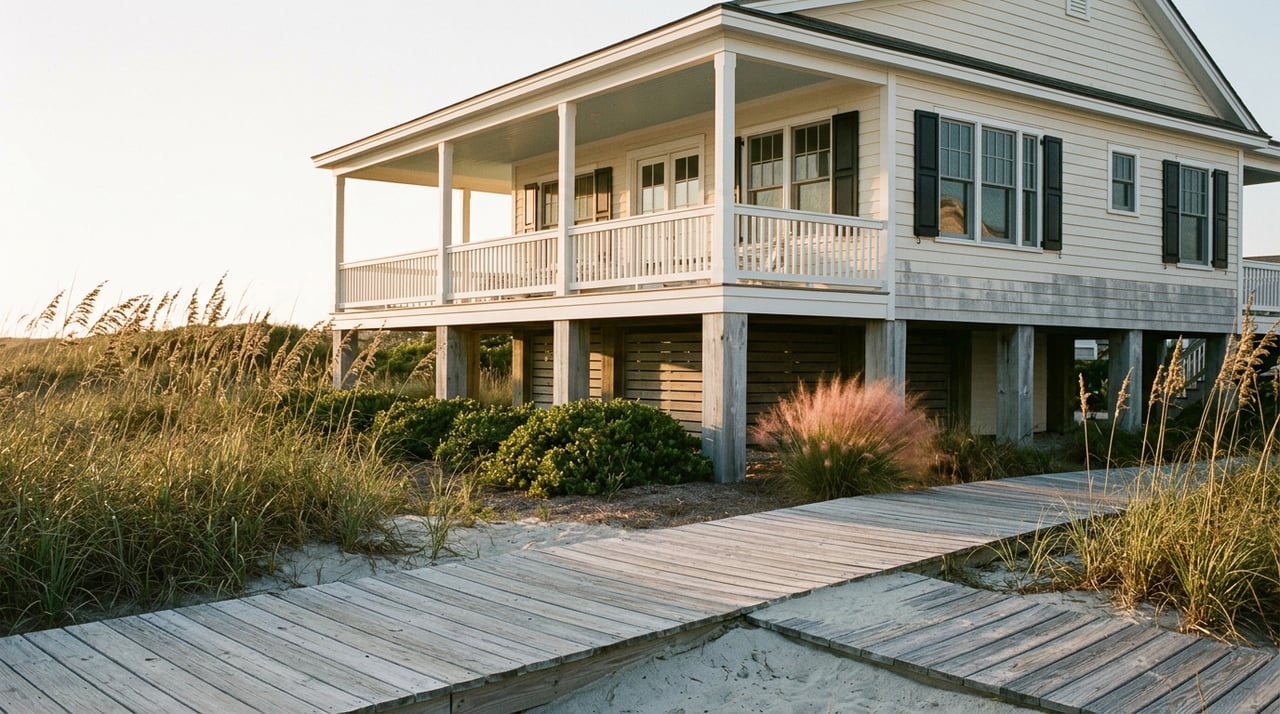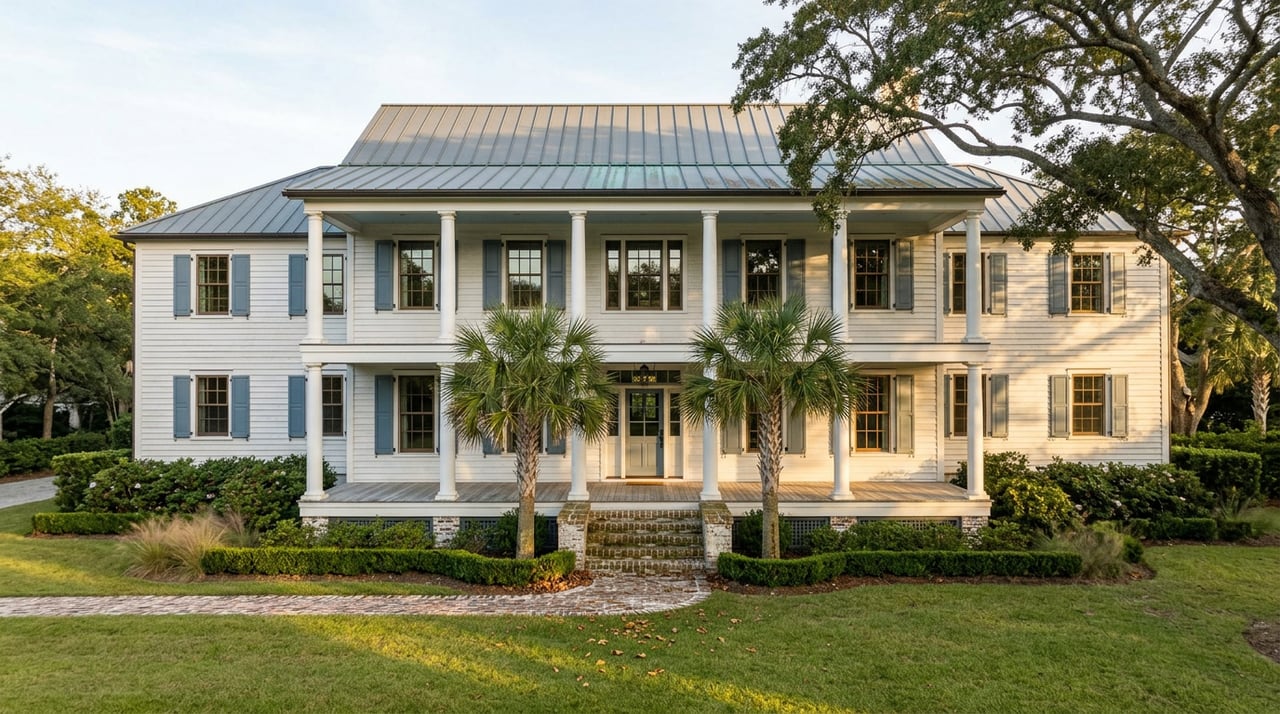
For the better part of three years, yard signs reading "Stop timeshares on Sullivan's" have dotted front lawns along the island's quiet residential streets. They point back to a single house on I'on Avenue, purchased by an entity called 2 SC Lighthouse, LLC and marketed in one-eighth ownership shares through a company called Pacaso. Neighbors organized. The town issued a zoning violation. And on February 18, 2026, the South Carolina Court of Appeals ruled, in a divided 2-1 opinion, that the arrangement does not meet the legal definition of a vacation rental at all.
If you are comparing Sullivan's Island to Isle of Palms right now, that ruling matters more than it might seem. It goes to the heart of what you are actually buying when you pay a premium for one barrier island over the other three miles away.
What the Medians Don't Explain
Anyone who has looked at both markets has seen the gap. Sullivan's Island closed out 2025 with a year-end median sale price near $4.2 million, with individual sales ranging from just under $1 million for one of the island's rare condominiums to more than $16 million for oceanfront estates. Isle of Palms, by contrast, showed an average home value around $1.64 million and a median list price just over $2 million as of April 2026, with well over a hundred homes on the market at any given time.
It is tempting to chalk that up to sand quality or lot depth. The two islands sit side by side, share a coastline, and draw from the same buyer pool of relocating executives, second-home buyers, and Charleston-area families. The beach itself does not explain a gap this wide.
| Sullivan's Island | Isle of Palms | |
|---|---|---|
| Median price (recent) | ~$4.2M (2025 year-end) | ~$2.07M median list (April 2026) |
| Price range | ~$900K to $16M+ | Broader, higher-volume inventory |
| Short-term rentals | Prohibited since 2001, with a small number of grandfathered exceptions | No cap on licenses; voters rejected a 1,600-license limit in November 2023 |
| Typical annual sales volume | Roughly 30 to 40 transactions a year | Considerably higher turnover |
| New construction permitting | 6 to 12 months, with 35-foot height limits and tree protection review | Standard municipal permitting |
The real divide sits in that third row.
The Rule Behind the Number
Sullivan's Island has prohibited rentals shorter than 30 days since 2001. A handful of properties that were already operating as rentals before the ordinance took effect were grandfathered in, but no new short-term rental license has been issued on the island in a quarter century. Layer on top of that a 35-foot height limit, mandatory tree protection review, a permitting process that routinely runs 6 to 12 months, and a barrier island's fixed land supply, and you get a market that produces only 30 to 40 sales a year across the entire island, from Breach Inlet at Station 28 down to the Ben Sawyer Bridge at Station 9.
Isle of Palms took the opposite path. The city's short-term rental program has no license cap. In November 2023, residents were asked to vote on a referendum that would have capped investment-property rental licenses at 1,600. It failed, with 54 percent voting against limiting the program, according to Post and Courier reporting on the outcome. Isle of Palms remains one of the more business-friendly beach communities in the Charleston area for buyers who want their purchase to also generate rental income.
Why a Ban Raises a Price Instead of Lowering One
Standard intuition says restricting what an owner can do with a property should suppress demand and, with it, price. Fewer permitted uses should mean fewer interested buyers. That is not what happens on Sullivan's Island.
The rental ban does not shrink the buyer pool so much as it re-sorts it. Isle of Palms attracts buyers who underwrite their purchase against projected nightly rates and occupancy, the kind of math that treats a home partly as a yield-generating asset. Sullivan's Island filters those buyers out at the ordinance level. What remains is a buyer who wants the opposite of turnover: no weekly changeover of strangers next door, no rental traffic on a residential street, a school pickup line made up of people who actually live there. That buyer is often paying cash, often already owns elsewhere in the Lowcountry, and is not comparing the purchase to a rental spreadsheet.
A renter pays for a stay. An owner simply owns. The distinction the Court of Appeals drew in February came down to exactly that line, and it is the same line that separates the two islands' buyer pools.
Scarcity and lifestyle exclusivity, not amenity, are what get capitalized into the price. The island is not more valuable because it does more. It is more valuable because it does less, and the buyer paying $4 million knows exactly what they are not going to have to deal with.
The Case That Complicates the Math
The Pacaso dispute started in October 2022, when the town's zoning administrator, Charles Drayton, notified Pacaso that its ownership structure at the I'on Avenue property amounted to an illegal timeshare rental. The town's Board of Zoning Appeals upheld that finding. So did the Charleston County Circuit Court. Pacaso and the property's owning entity appealed again, arguing that fractional co-owners are not tenants and that no rental transaction was taking place.
On February 18, 2026, the South Carolina Court of Appeals reversed the circuit court in a 2-1 decision. The majority found that because the individuals staying at the house held ownership shares rather than paying to rent, and because there was no landlord-tenant relationship or payment for temporary lodging, the town's own definition of a vacation rental simply did not apply to the arrangement. The opinion is unpublished and does not carry binding precedent, but its practical effect on Sullivan's Island is immediate: the town cannot treat fractional ownership as a rental violation under its current ordinance language.
Residents have not accepted the outcome quietly. A campaign organized by resident Tim Emrich, which put more than 200 yard signs across the island, has continued pushing the town to seek further review. As of reporting this spring, Pacaso's broader legal fight with the town remained unresolved, and the possibility of a rehearing or an appeal to the state Supreme Court was still on the table.
Nothing about the ruling touches nightly rentals. Those remain flatly prohibited. What it opens is a narrower question: whether a company selling one-eighth shares in a $4 million house, with buyers staying two to fourteen nights at a time through a scheduling app, changes what a next-door neighbor should expect from a property that looks, from the street, exactly like a full-time family home.
What This Means If You're Comparing the Two Islands Right Now
If you are drawn to Sullivan's Island specifically for the promise of a quiet, owner-occupied street, understand that the promise now has an asterisk. The rental ban itself has not moved. What has moved is the legal boundary around ownership structures that were not contemplated when the ordinance was written in 2001. A property next door could, in theory, be sold into a fractional structure without triggering the same violation that shut down the I'on Avenue arrangement in 2022.
If you are leaning toward Isle of Palms because the rental income helps the numbers work, confirm the specific zoning district before you assume anything transfers with the deed. Not every parcel on the island is treated the same way under the city's short-term rental program, and licensing history on a specific address is worth confirming before you write an offer that depends on it.
Two Questions Worth Asking Before You Write an Offer
- On Sullivan's Island: Has any property on this street, or one adjacent to it, been the subject of a zoning inquiry related to fractional or co-ownership use? Ask your agent to check recent Board of Zoning Appeals records, not just the MLS listing history.
- On Isle of Palms: Does the specific address carry an active short-term rental license today, and has that license history been verified independently of the seller's representation, rather than assumed from the island's general reputation?
A Few Questions Worth Answering
Is Sullivan's Island's rental ban still in effect? Yes. The February 2026 ruling addressed one fractional ownership arrangement. Traditional short-term rentals under 30 days remain prohibited island-wide, with the same small number of pre-2001 grandfathered exceptions that have existed for years.
Can I legally buy a fractional share of a home on Sullivan's Island? As of the Court of Appeals ruling, a fractional ownership structure like Pacaso's has been found not to meet the town's current definition of a vacation rental. The decision is unpublished, does not set binding precedent, and the town may still pursue further review, so this is not a settled question long term.
Does Isle of Palms cap the number of short-term rental licenses? No. Voters rejected a proposed 1,600-license cap in a November 2023 referendum. The city continues to issue licenses without a numeric limit, though specific zoning districts and individual HOA rules can still restrict where and how a rental operates.
If you are weighing these two islands against each other, the sticker price is the least interesting number in the comparison. What you are actually pricing is a rule, and right now that rule is being tested in a courtroom, not just an ordinance book.
Robertson Allen and the team at Cassina Group work these two markets closely enough to track a zoning case as carefully as a listing sheet. If you are trying to figure out what a Sullivan's Island or Isle of Palms purchase actually commits you to, schedule a private market consultation before you write an offer.