If you own a historic Charleston home, you already know its charm is not the whole story. Today’s luxury buyer wants character, but they also want clarity, comfort, and a polished first impression. The good news is that thoughtful staging can do both, helping buyers picture daily life in a historic home without stripping away the details that make it special. Let’s dive in.
Why staging matters in historic Charleston
Staging is especially important in Charleston’s luxury market because buyers often respond quickly to a home that feels both authentic and livable. According to the National Association of Realtors’ 2025 Profile of Home Staging, 83% of buyers’ agents said staging made it easier for buyers to visualize a property as a future home. That matters when your home has distinctive architecture that buyers may admire but still need help interpreting.
In Charleston, staging also needs to respect preservation priorities. The City of Charleston’s preservation framework emphasizes contextual design, repair over replacement, and preserving the authenticity of historic forms. For sellers, that means the goal is not to make a historic home feel new. The goal is to present it in a way that feels elevated, well cared for, and easy to enjoy.
Start with Charleston’s historic character
Before you bring in furniture or accessories, identify what makes your home architecturally significant. In many peninsula homes, that may include entrance halls, parlors, staircases, tall windows, original floor patterns, mantels, decorative millwork, and piazzas. These are the details that often create the emotional response buyers remember.
Charleston’s preservation guidance and related standards consistently support retaining original materials and repairing them when possible. That mindset should shape staging decisions. Instead of covering age with trendy upgrades or oversized furnishings, you want to let the home’s original craftsmanship lead the story.
Prioritize the rooms buyers notice first
The most commonly staged rooms are the living room, primary bedroom, and dining room, according to the National Association of Realtors. In a historic Charleston home, these spaces often overlap with the rooms that carry the strongest architectural presence. That makes them the right place to focus your effort and budget first.
Stage primary rooms with restraint
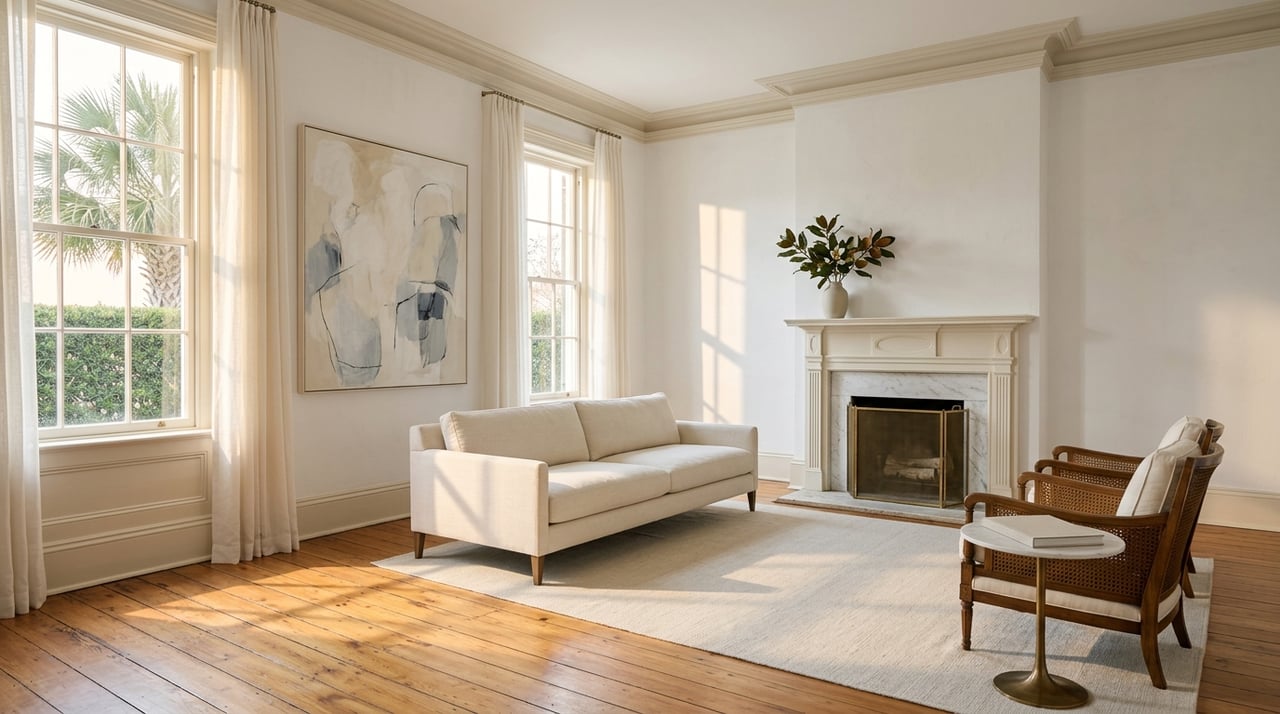
The National Park Service notes that primary interior spaces often define a building’s historic character. In practice, that means rooms like the entrance hall, parlor, formal sitting room, and key corridors deserve a light touch. Buyers should be able to see the proportions of the room and the details that set it apart.
Use fewer, better-scaled pieces rather than trying to fill every corner. A well-placed sofa, a pair of chairs, and a refined rug can frame a mantel or highlight tall windows far better than a crowded furniture plan. When the room breathes, the architecture does the selling.
Keep sightlines open
Historic homes often have beautiful rhythm and symmetry. Large case goods, bulky sectionals, or heavy drapery can interrupt that flow and make rooms feel smaller. Clear sightlines help buyers appreciate stair rails, fireplaces, moldings, and floor patterns without distraction.
This is especially important in Charleston single houses and other smaller-scale historic forms. The city’s preservation plan warns against genericizing iconic house types. Good staging should support the home’s natural scale, not fight it.
Use contemporary pieces carefully
Contemporary furniture and art can work beautifully in a historic home when they act as a layer, not a replacement. Clean-lined seating, tailored textiles, and restrained artwork can make a room feel current while still honoring its age. The key is balance.
Avoid anything that blocks a character-defining feature or competes too loudly with original details. In luxury staging, contrast often works best when it is intentional and quiet. You want buyers to notice the home first, then the design.
Simplify secondary spaces for livability
Not every room needs a dramatic moment. Secondary spaces should help buyers understand how the home lives today. The National Park Service notes that these areas can accommodate more change, but historic finishes and visible architectural features should still be protected when possible.
Make kitchens feel functional
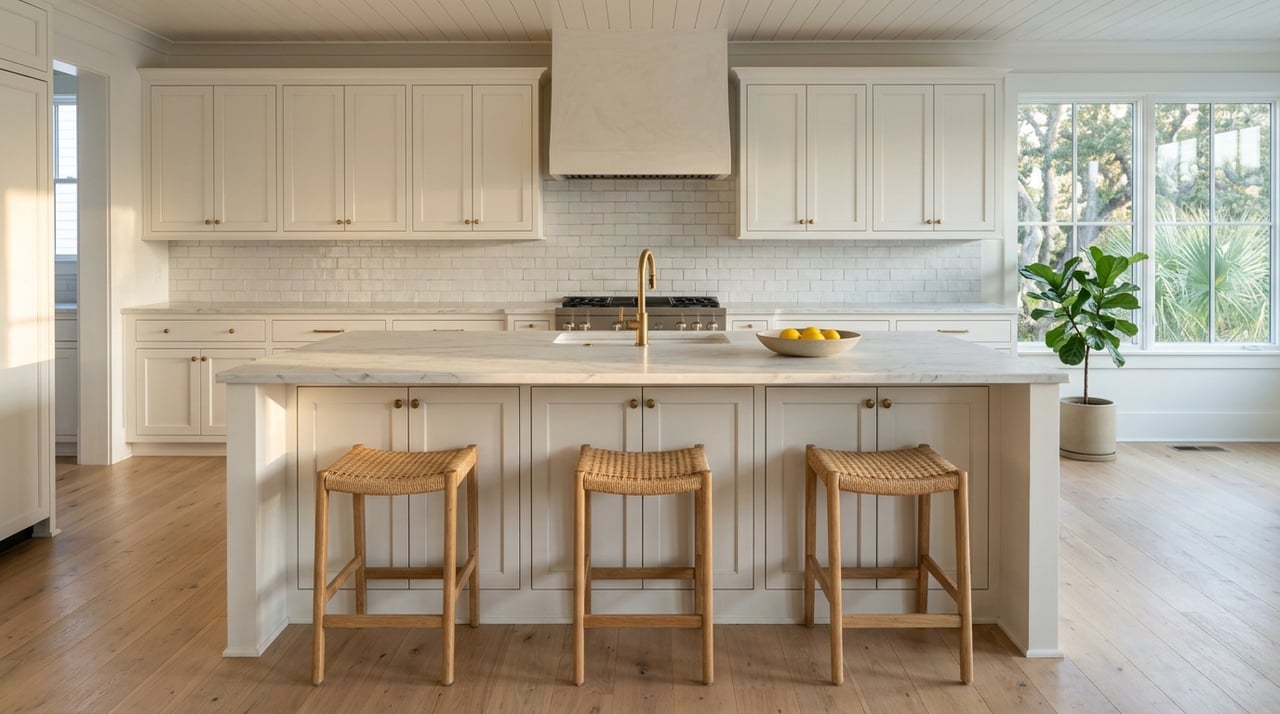
Charleston’s preservation plan notes that pressure for large kitchens and open floor plans can threaten historic interiors. Right before listing, that is a strong reason to avoid rushed changes that compromise the home’s integrity. Instead, staging should focus on clarity, cleanliness, and ease of use.
Clear counters, improve task lighting where possible, and edit small appliances and décor. If the kitchen has historic cabinetry, trim, or flooring, let those features show. Buyers do not need a false promise of brand-new construction. They need to see a kitchen that feels gracious, usable, and in step with the house.
Refresh baths without overdoing them
Bathrooms should feel clean, bright, and calm. Simple towels, a restrained color palette, and good lighting can go a long way. If there are historic finishes or older details, keep the presentation neat and intentional rather than trying to disguise them with heavy styling.
Luxury buyers tend to notice quality, proportion, and maintenance. They also notice when a seller has tried too hard to modernize a historic room in a way that feels disconnected from the rest of the home. A lighter touch usually reads as more credible.
Define flexible rooms clearly
If your home has a secondary bedroom, small study, or rear sitting room, give it one clear purpose. Buyers can struggle when a room feels undefined. A simple desk setup, a reading chair, or a neatly staged guest room can help them understand how the space fits modern life.
That kind of clarity matters because staging is ultimately about visualization. When buyers can quickly grasp how each room works, they are more likely to see the home as both distinctive and practical.
Treat piazzas as true living spaces
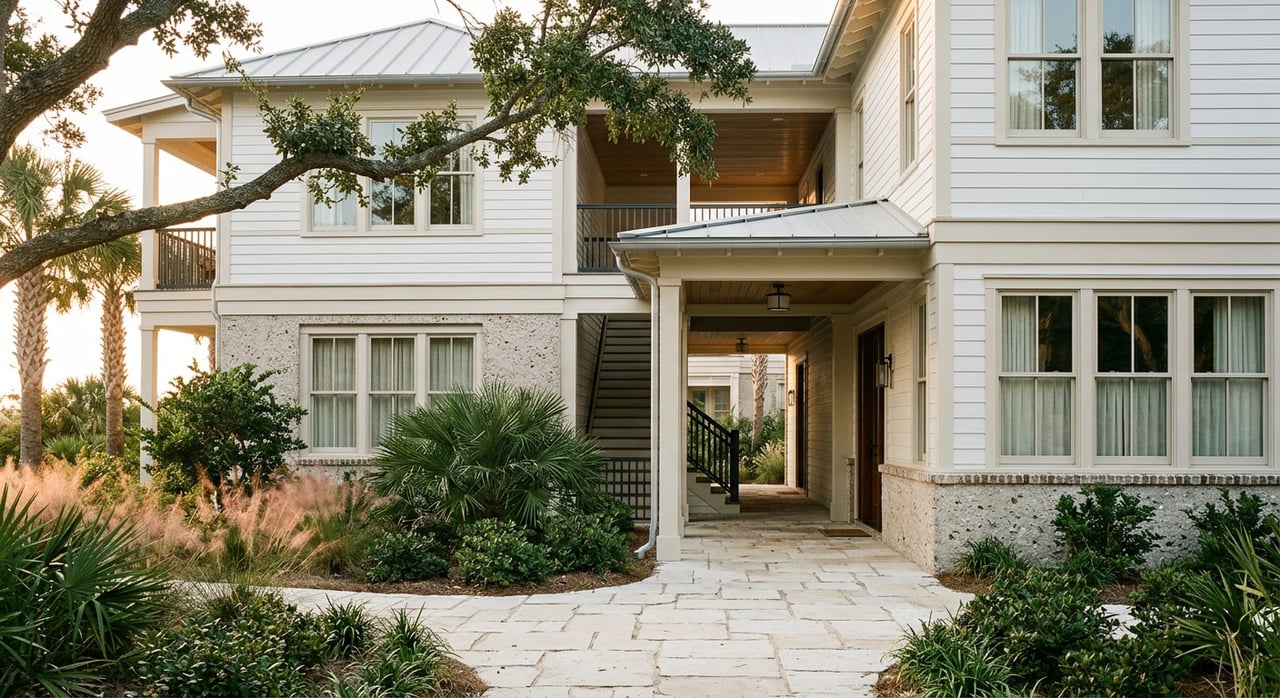
In Charleston, piazzas and porches are not extras. They are part of the architecture and part of the lifestyle buyers are often seeking. City guidance treats piazzas and porches as character-defining features, and Charleston’s preservation resources note that the classic single house uses south-facing piazzas to reduce solar load and channel the breeze.
Furnish the piazza lightly
Your piazza should read as an outdoor room, not a storage zone or a design afterthought. A small seating group, lanterns, and planters can create warmth without obscuring columns, railings, flooring, or trim. Keep the arrangement open enough that buyers can still appreciate the structure itself.
Choose furniture that feels temporary and tasteful rather than built-in or overly bulky. The point is to suggest gracious outdoor living while keeping the architecture visible.
Let the breeze and light lead
Charleston buyers often respond to atmosphere as much as square footage. A well-staged piazza should highlight shade, airflow, and connection to the street, garden, or courtyard. Simple styling helps buyers imagine morning coffee, evening conversation, and the daily ease of indoor-outdoor living.
This is one of the clearest places where historic design and modern luxury align. You do not need to reinvent the space. You need to reveal why it has endured.
Keep the exterior preservation-minded
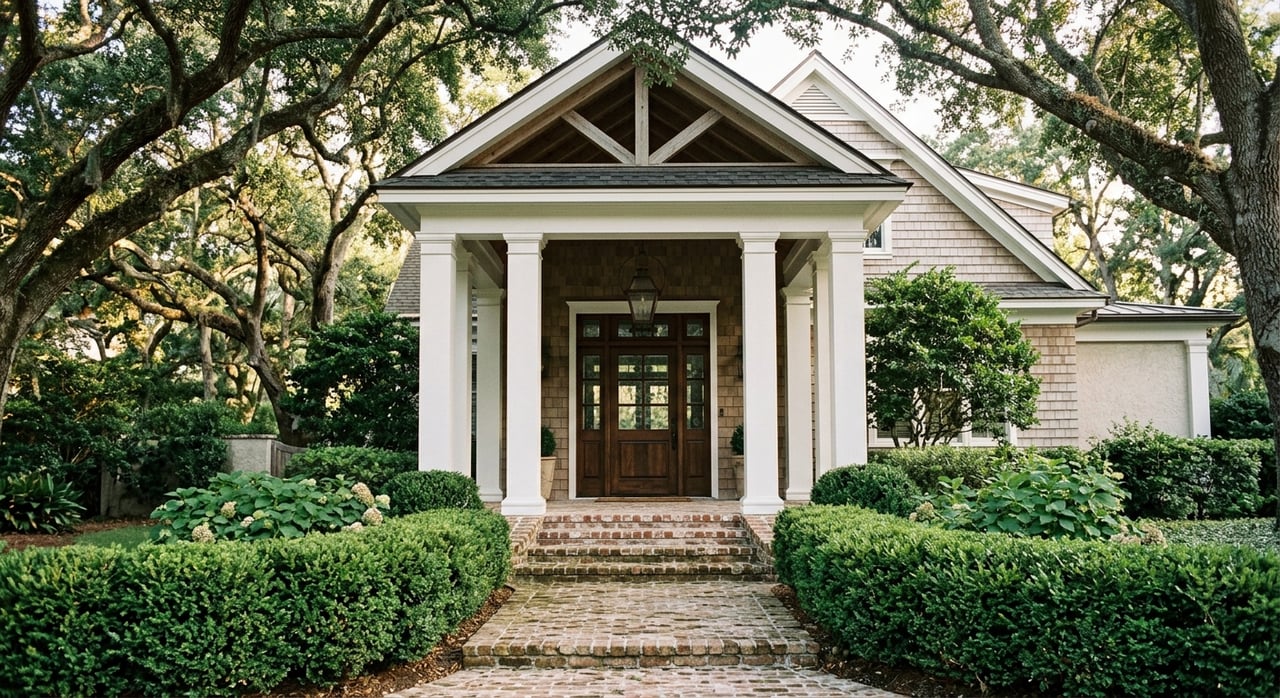
The exterior sets expectations before buyers ever step inside. In a historic district, that also means visible changes may come with review requirements. Charleston’s Board of Architectural Review oversees certain new construction, alterations, and renovations visible from the public right-of-way, and the city advises property owners to check with staff before starting visible exterior work.
Repair before replacing
Charleston’s guidelines favor repair over replacement and in-kind replacement when repair is not possible. For sellers, this can shape pre-listing decisions in a practical way. If shutters, trim, doors, or wood elements need attention, preservation-minded repair often supports both authenticity and presentation.
That approach also tends to feel more credible to luxury buyers shopping for historic homes. They are often looking for stewardship, not a quick cosmetic rewrite.
Avoid distracting exterior updates
Exterior staging should never compete with the architecture. Keep walkways clear, refresh landscaping neatly, and make sure mechanical equipment is not visibly drawing attention where city guidance says it should not be visible from the public right-of-way. If you are considering exterior paint changes, awnings, or other visible updates, remember that these items can be reviewed case by case.
The safest strategy is to avoid last-minute visible alterations without checking first. A delayed project can create more stress than value when you are preparing to list.
What today’s luxury buyer wants to feel
A successful staged historic home does not feel frozen in time. It feels confident, layered, and ready for modern life. Buyers want to see provenance, but they also want to understand how they would entertain, relax, and move through the house day to day.
That is why the best staging in Charleston tends to be preservation-minded presentation. It reveals original features, edits visual noise, and adds comfort without erasing age. When done well, it creates a powerful message: this home has history, and it has been cared for in a way that still makes sense today.
If you are preparing to sell an architecturally significant home in Charleston, the right strategy starts with understanding what should be highlighted, what should be simplified, and what should be left alone. For tailored guidance on presenting a historic property to today’s luxury buyer, schedule a private market consultation with Robertson Allen.
FAQs
Which rooms matter most when staging a historic Charleston home?
- Focus first on the living room, primary bedroom, and dining room, since these are among the most commonly staged rooms and often carry the strongest visual impact for buyers.
How much modernization is too much for a Charleston historic home?
- Modernization goes too far when it hides or removes character-defining features, disrupts the home’s original scale, or pushes the interior toward a generic look instead of preserving its historic identity.
Can contemporary art work in a Charleston historic home?
- Yes, contemporary art can work well when it is scaled carefully and does not distract from original features like mantels, windows, millwork, or stair details.
Should a Charleston piazza be staged for listing photos and showings?
- Yes, a piazza should usually be staged as an intentional outdoor living area with light furnishings and simple accents that support, rather than cover, the architecture.
What exterior changes may trigger review for a Charleston historic property?
- Visible exterior work may fall under City of Charleston review, so sellers should check with city staff before starting alterations, renovations, or other changes visible from the public right-of-way.